
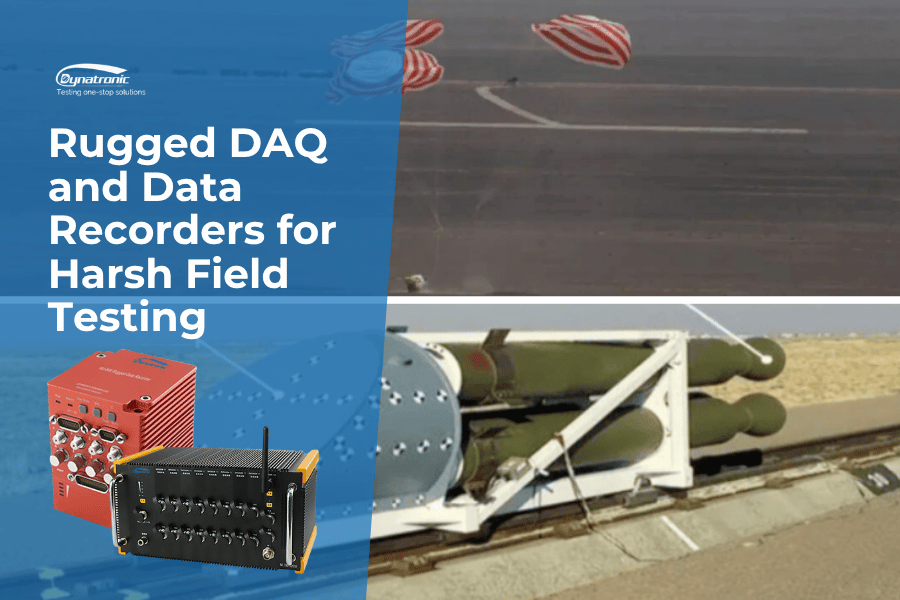
Some tests do not happen in a quiet laboratory.
They happen inside aircraft.
On vehicles.
Near engines.
On railway systems.
Inside test cabins.
During shock events.
During field trials.
Inside confined installation spaces.
Or in environments where vibration, temperature, humidity, overload, impact, and limited access can all affect the measurement.
In these conditions, a standard laboratory DAQ system may not be enough.
A rugged DAQ system or rugged data recorder is designed to capture reliable measurement data in harsh field testing environments where normal data acquisition equipment may struggle. The system must not only measure signals accurately. It must also survive the test, protect the data, operate with limited supervision, and keep recording when conditions become difficult.
For aerospace, automotive, defense, transportation, mechanical equipment, civil engineering, marine, energy, and research applications, rugged data acquisition is often the difference between a complete test result and lost data.
This guide explains what engineers should check when choosing a rugged DAQ system or data recorder for harsh field testing, including shock resistance, vibration resistance, power reliability, sensor support, channel synchronization, backup storage, compact installation, long-duration recording, and data protection.
Direct Answer: What Is a Rugged DAQ System?
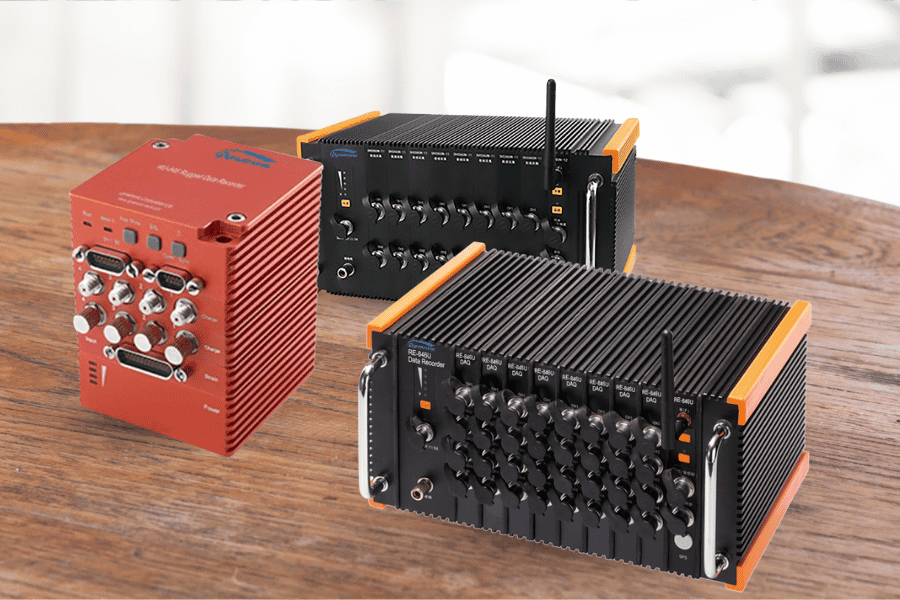
A rugged DAQ system is a data acquisition system designed to operate reliably outside normal laboratory conditions.
It is used when the test environment includes shock, vibration, high overload, temperature changes, humidity, dust, movement, limited installation space, mobile operation, or difficult access.
A rugged data recorder usually combines:
Signal acquisition modules
Sensor conditioning
Internal storage
Standalone recording capability
Battery or external power options
Shock-resistant hardware
Vibration-resistant design
Environmental protection
Synchronous multi-channel acquisition
Software for setup, monitoring, playback, and analysis
A rugged DAQ system may be used for field test data acquisition, flight test data acquisition, vehicle testing, railway testing, shipboard testing, impact testing, shock testing, engine testing, crash testing, mobile structural testing, or long-term monitoring.
The goal is simple: capture complete and reliable data when the test environment is too demanding for normal instrumentation.
Why Standard Lab DAQ Systems May Not Be Enough
Laboratory DAQ systems are often excellent for controlled environments. They may offer high accuracy, flexible configuration, and powerful software. But harsh field testing creates additional challenges.
A lab system may not be suitable when:
The equipment must be installed in a narrow space.
The test object is moving.
The system must operate without a computer nearby.
Strong shock or vibration may damage the electronics.
The test involves high overload or impact.
The system must record data during flight, transport, or vehicle operation.
The environment includes high humidity, dust, heat, cold, or electromagnetic interference.
The test cannot be repeated easily.
Data must be protected even if one storage path fails.
Engineers cannot access the system during the test.
In these cases, ruggedness is not just about the enclosure. It is about the full measurement chain: sensors, signal conditioning, synchronization, power supply, data storage, software, recovery, and post-test analysis.
Rugged DAQ vs Standard DAQ: Key Differences
| Requirement | Standard Lab DAQ | Rugged DAQ / Rugged Data Recorder |
|---|---|---|
| Test environment | Controlled laboratory | Field, vehicle, aircraft, shipboard, impact, harsh environment |
| Installation | Usually bench, rack, or test room | Confined spaces, mobile platforms, test articles |
| Operation | Often connected to computer | Online, offline, standalone, or remote operation |
| Shock/vibration exposure | Limited | Designed for strong shock and vibration |
| Power | Stable lab power | Battery, external DC power, or mobile power options |
| Data storage | Often computer-based | Internal storage and post-test recovery |
| Data protection | Depends on setup | May require backup or redundant storage |
| Synchronization | System-level timing | Multi-unit, GPS, or clock synchronization may be needed |
| Sensor support | Application dependent | Strain, vibration, shock, pressure, temperature, torque, voltage, charge, noise |
| Main risk | Configuration or data quality | Equipment survival, data integrity, access, and recovery |
The question is not whether one is better than the other. The question is where the test will happen and what the system must survive.
When Engineers Need Rugged Field Data Acquisition
A rugged DAQ system is usually needed when the test involves one or more of these conditions.
1. Strong shock or impact
Impact events can be short, violent, and difficult to repeat. The DAQ system must capture transient signals without interruption or distortion.
Typical applications:
Spacecraft landing tests
Crash and impact testing
Drop testing
Blast or shock testing
Missile or launch testing
Protective structure testing
Sports safety equipment testing
2. High vibration
In vehicle, aircraft, engine, railway, and machinery testing, the DAQ hardware may be exposed to the same vibration environment as the test object.
Typical applications:
Aircraft vibration testing
UAV vibration surveys
Vehicle road testing
Gearbox vibration and noise testing
Railway running stability tests
Engine test bed monitoring
Rotating machinery diagnostics
3. High overload or acceleration
Some tests involve high-G events, acceleration, rapid movement, or flight conditions where equipment must continue operating reliably.
Typical applications:
Flight test data acquisition
Abort flight testing
Rocket sled testing
Missile launch testing
Aerospace separation events
Vehicle crash or deceleration tests
4. Limited installation space
Many field tests do not have room for large instrumentation racks. The recorder may need to fit inside a vehicle, aircraft compartment, payload bay, capsule, test article, or narrow equipment space.
Typical applications:
Airborne testing
Vehicle-borne testing
Shipboard testing
Spacecraft testing
Embedded structural measurement
Confined mechanical systems
5. No continuous computer connection
Some tests require the DAQ system to work independently. Engineers may not be able to keep a computer connected throughout the test.
Typical applications:
Flight testing
Transport monitoring
Remote field tests
Long-duration vehicle tests
Unattended monitoring
Harsh test sites
6. Data must be recovered after the event
For one-time or high-value tests, the data may be more important than the hardware. The recorder must store data securely and allow post-test retrieval.
Typical applications:
Abort flight tests
Spacecraft landing and water impact tests
Crash testing
Flight qualification
Defense testing
Environmental and transport monitoring
What Makes a DAQ System Truly Rugged?
A rugged DAQ system should be evaluated as a complete engineering tool, not just a stronger box.
Here are the key factors engineers should review.
1. Shock Resistance
Shock resistance is one of the most important requirements for harsh field testing.
In impact, launch, crash, drop, blast, and separation events, the system may experience sudden acceleration and mechanical impact. If the recorder fails at the moment of the event, the most important data may be lost.
Engineers should check:
Maximum shock resistance
Shock duration and waveform conditions
Mounting method
Connector retention
Internal component protection
Storage media durability
Sensor survivability
Whether the system has been used in similar test conditions
Shock resistance matters especially when the event is short and cannot be repeated.
In tests such as spacecraft abort, landing impact, rocket sled trials, and crash testing, the DAQ system must be ready before the event starts and remain functional after the event ends.
2. Vibration Resistance
A rugged DAQ system may be mounted directly on a moving platform or inside a vibrating structure. This means the DAQ hardware, connectors, storage, battery, and sensor inputs must continue working under vibration.
Engineers should check:
Operating vibration specification
Connector locking and cable strain relief
Mounting orientation
Internal storage resistance to vibration
Whether the system can record continuously under vibration
Signal quality under real vibration exposure
Sensor and cable protection
Vibration resistance is important for:
Vehicle testing
Shipboard testing
Engine test beds
Mobile equipment
If the data recorder is exposed to the same vibration environment as the test article, mechanical durability is part of measurement quality.
3. Environmental Protection
Harsh field tests may involve heat, cold, humidity, dust, outdoor exposure, oil, vibration, water spray, or corrosive environments. A rugged DAQ system should match the environmental conditions of the test.
Engineers should check:
Operating temperature range
Storage temperature range
Humidity tolerance
Dust protection
Water resistance
Corrosion resistance
Enclosure material
Connector sealing
Battery performance under temperature changes
Sensor and cable environmental ratings
This is especially important for on-vehicle, airborne, shipboard, civil engineering, transport, and outdoor testing. A system that works well in a laboratory can still fail in the field if it is not protected against the actual environment.
4. Compact Installation
Many harsh tests also have limited installation space. The DAQ system may need to fit inside an aircraft bay, vehicle body, engine compartment, escape tower, capsule, machinery housing, transport container, or mobile platform. A compact rugged recorder helps reduce installation difficulty and minimize impact on the test object.
Engineers should check:
Physical size
Weight
Mounting options
Cable access
Heat dissipation
Battery placement
Connector direction
Number of channels per unit
Whether multiple units can be distributed
Whether the system affects the test object’s mass or balance
Compact design is especially important for aerospace and vehicle-borne testing, where every gram and every millimeter can matter.
5. Sensor and Signal Support
A harsh field test rarely measures only one signal type.
A single test may need to capture:
Strain
Vibration
Shock
Acceleration
Pressure
Temperature
Displacement
Torque
Voltage
Charge signals
Noise
Speed
Overload
Environmental parameters
The rugged DAQ system must support the right sensors and signal conditioning modules.
Engineers should check:
IEPE accelerometer support
Charge sensor support
Strain bridge support
Full bridge, half bridge, and quarter bridge options
Thermocouple or RTD input
Pressure sensor compatibility
Voltage input ranges
Anti-aliasing filters
Low-pass filters
TEDS sensor support
Channel isolation
Sensor self-checking
Bridge self-checking
For engineering analysis, multi-signal support is important because one physical event may appear across several measurement types.
For example, a spacecraft impact test may need strain and acceleration. A flight test may need vibration, pressure, temperature, and displacement. A vehicle test may need vibration, noise, speed, and structural response.
The value comes from seeing these signals together.
6. Sampling Rate and Transient Capture
Harsh field tests often involve fast events. A shock event, impact response, launch condition, separation mechanism, crash pulse, or blast wave may happen in milliseconds. If the sampling rate is too low, the system may miss the peak, distort the waveform, or fail to capture the true dynamic response.
Engineers should check:
Required sampling rate per channel
Number of channels at full sampling rate
Whether acquisition is simultaneous
Frequency response
Triggering capability
Pre-trigger and post-trigger recording
Cache or buffer capacity
Anti-aliasing filter performance
Continuous vs triggered recording modes
Data storage speed
For impact, shock, and transient testing, sampling performance should be matched to the actual event duration and frequency content.
It is not enough to look at the maximum sampling number in isolation. Engineers should confirm how the system performs with the required channel count, sensor type, recording mode, and storage configuration.
7. Online, Offline, and Standalone Operation
Field testing does not always allow continuous computer connection.
A rugged DAQ system may need to work in different modes:
Online mode
The system is connected to a computer or network for real-time display, control, storage, and analysis.
Useful for:
Laboratory field simulation
Engine test beds
Vehicle test benches
Railway tests
Real-time monitoring
Setup verification
Offline mode
The system records internally during the test and engineers retrieve the data afterward.
Useful for:
Flight tests
Spacecraft tests
Remote tests
Confined installations
Tests where connection is not possible
High-risk or one-time events
Standalone mode
The system operates independently without a connected computer during acquisition.
Useful for:
Mobile testing
Unattended monitoring
Transport monitoring
Airborne or shipboard tests
Harsh environments
The right working mode depends on access, safety, test duration, data volume, and whether real-time monitoring is required.
For critical tests, offline or standalone data storage can protect the measurement when real-time communication is interrupted.
8. Data Storage and Backup Protection
In harsh field testing, data protection is just as important as data acquisition. A test may expose the recorder to shock, vibration, power interruption, communication loss, or physical impact. If the data storage fails, the test may have to be repeated — or the opportunity may be lost completely.
Engineers should check:
Internal storage capacity
Storage write speed
Anti-vibration storage design
Backup storage options
Redundant recording paths
Post-event data recovery
File integrity protection
Power interruption handling
Offline storage reliability
Export and post-processing workflow
For one-time tests, redundant storage can be critical.
In aerospace and defense testing, data is often the main evidence used for design verification, safety evaluation, and post-test analysis. Losing it can mean losing the value of the entire test campaign.
9. Power Reliability
A rugged data recorder must keep working for the full test duration. Power planning is especially important when the system is installed inside a vehicle, aircraft, capsule, transport container, or remote field setup.
Engineers should check:
Battery options
External DC power range
Power consumption
Test duration
Startup sequence
Power interruption protection
Charging time
Operating temperature effect on battery performance
Whether power modules can be replaced or scaled
Whether the system can record safely during voltage fluctuation
Power failure during a test can cause data loss, incomplete measurement, or corruption. For long-duration or unattended testing, power reliability should be planned early, not after the sensor layout is finished.
10. Channel Synchronization
Field tests often involve multiple sensors, multiple modules, or multiple recorders. If the data is not synchronized, engineers may struggle to understand the relationship between signals.
Synchronization is important when comparing:
Strain and acceleration
Vibration and noise
Pressure and structural response
Temperature and strain
Load and displacement
Speed and vibration
Multiple measurement points
Multiple DAQ units
Sensor data and test event timing
Engineers should check:
Whether all channels are sampled simultaneously
How multiple modules are synchronized
Whether multiple recorders can work together
GPS synchronization options
External clock support
Trigger synchronization
Time accuracy across devices
Data alignment during post-processing
For aerospace, vehicle-borne, railway, and large structural testing, synchronization turns separate measurements into one complete event timeline.
11. Software for Setup, Monitoring, Playback, and Analysis
A rugged DAQ system is not only hardware. The software must help engineers configure sensors, monitor signals, record data, review events, analyze results, and export reports.
Useful software functions include:
Channel setup
Sensor configuration
Sampling control
Trigger setup
Real-time waveform display
Frequency analysis
X-Y recording
Waterfall charts
Cloud charts
Instrument panel display
Audio/video synchronization
Data playback
Data export
Post-processing
Report generation
Alarm or event review
Multi-recorder data alignment
For harsh field testing, software should support both pre-test confidence and post-test insight.
Before the test, engineers need to confirm that every channel works.
During the test, the system should record reliably.
After the test, the software should help engineers understand what happened without wasting time rebuilding the data manually.
12. Data Recovery After Harsh Events
In some tests, the recorder may experience extreme physical conditions.
The most important question becomes:
Can the data still be recovered?
Data recovery matters in:
Spacecraft landing tests
Crash tests
Abort flight tests
Rocket sled tests
Impact tests
Transport safety monitoring
Defense testing
High-overload events
Engineers should check:
Whether the system supports post-event recovery
Whether offline data can be accessed after the test
Whether data is protected if communication fails
Whether backup storage exists
Whether the file system is robust
Whether the recorder can operate without supervision
Whether the system has been used in one-time critical events
For harsh testing, the measurement system must be selected with the end of the test in mind.
The test is not complete when the event happens. It is complete when the data is safely recovered and analyzed.
Rugged DAQ Applications by Industry
Aerospace and Flight Testing
Aerospace testing is one of the most demanding applications for rugged DAQ systems. The equipment may need to operate inside aircraft, spacecraft, UAVs, engine test beds, escape systems, launch environments, or recovery systems.
Common aerospace measurements include:
Vibration
Shock
Strain
Acceleration
Overload
Pressure
Temperature
Noise
Displacement
Blade strain
Flight control data
Environmental parameters
Rugged aerospace recorders are useful for:
Flight test data acquisition
Aircraft vibration monitoring
UAV operational vibration testing
Aero-engine flight tests
Spacecraft abort testing
Spacecraft landing and water impact tests
Rocket sled testing
Supersonic model aircraft testing
Satellite transport monitoring
In these applications, the data recorder must be compact, reliable, synchronized, and capable of protecting data during high-value test events.
Vehicle-Borne and Automotive Testing
Vehicle testing often involves vibration, noise, structural response, road load, powertrain behavior, and component durability. A rugged vehicle data recorder may be installed inside the cabin, under the vehicle, near the powertrain, or on a test fixture.
Common measurements include:
Vibration
Noise
Acceleration
Strain
Displacement
Temperature
Speed
Torque
Voltage
Road-load signals
Rugged DAQ systems are useful for:
Vehicle road testing
Automotive NVH testing
Gearbox vibration and noise testing
White body modal testing
Powertrain durability testing
Electric vehicle component testing
Suspension and structural validation
Mobile test campaigns
Vehicle-borne testing requires systems that can record reliably during motion, vibration, temperature variation, and limited access.
Defense and High-Overload Testing
Defense and military testing may involve shock, blast, high acceleration, launch events, armored vehicle monitoring, and mechanical impact.
Common measurements include:
Transient acceleration
Shock
Vibration
Strain
Pressure
Noise
Engine and gearbox vibration
Structural response
Overload
Rugged DAQ systems are useful for:
Missile vertical launch transient overload tests
Armored vehicle condition testing
Defense vehicle vibration testing
Blast and shock measurement
Shipboard structural testing
Weapons platform response testing
In these tests, measurement equipment must combine ruggedness with fast transient capture and reliable data recovery.
Transportation and Railway Testing
Railway and transport testing often involves long-duration monitoring under real operating conditions.
Common measurements include:
Vibration
Stability
Acceleration
Noise
Structural response
Running behavior
Temperature
Displacement
Rugged DAQ systems are useful for:
Train running stability tests
Rail vehicle vibration testing
Bogie and suspension testing
Transport safety monitoring
Long-duration mobile measurement
Because the system is exposed to motion, vibration, and changing conditions, ruggedness and stable recording are important.
Mechanical Equipment and Machinery Testing
Mechanical equipment testing often requires measurement during real operation, not only on a static test bench.
Common measurements include:
Vibration
Noise
Torque
Strain
Temperature
Pressure
Displacement
Dynamic response
Rugged DAQ systems are useful for:
Gearbox testing
Engine vibration testing
Pump and motor testing
Rotating machinery diagnostics
Large mechanical structure testing
Impact and transient response testing
Field troubleshooting
The DAQ system must be able to capture useful data while the machine is operating under realistic conditions.
Civil Engineering and Infrastructure Field Testing
Civil engineering testing often happens outdoors, across large structures, or over long periods.
Common measurements include:
Strain
Vibration
Displacement
Tilt
Temperature
Load
Structural response
Rugged DAQ systems and monitoring instruments are useful for:
Bridge testing
Tower monitoring
Structural health monitoring
Pipeline monitoring
Building vibration testing
Field load testing
Long-term infrastructure monitoring
In these applications, ruggedness, power stability, sensor protection, and long-duration recording are important.
Example: RU-846 in the Mengzhou Abort Flight Test
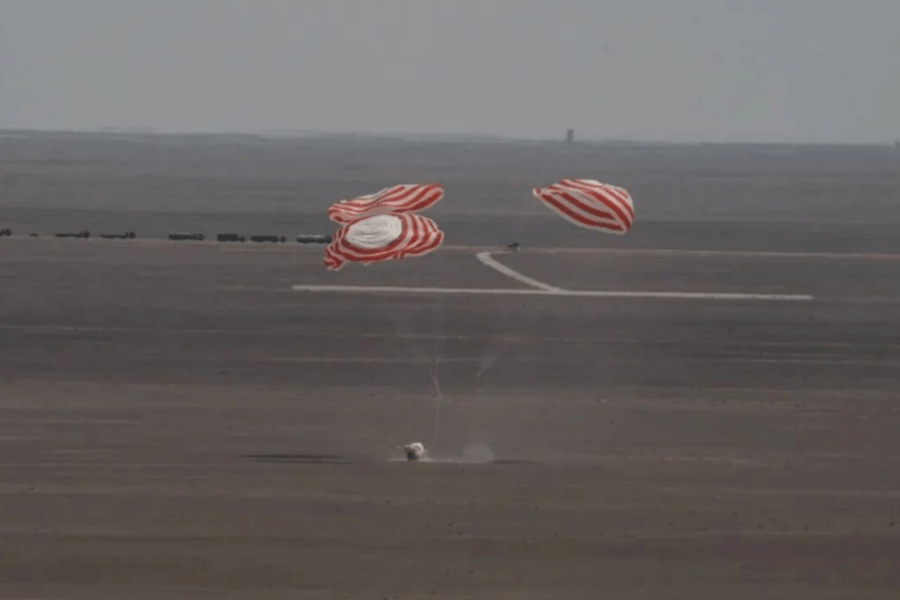
The Mengzhou zero-altitude abort flight test is a strong example of harsh-environment data acquisition. The test involved severe shock, high overload, high-frequency response, multiple signal types, limited installation space, and one-time data capture requirements.
The RU-846 Rugged Micro Dynamic Signal Test and Analysis System was selected because the system needed to be compact, lightweight, modular, shock-resistant, and capable of synchronous multi-channel acquisition.
The system captured multiple types of data, including:
Structural vibration
Stress and strain
High-frequency shock
Overload
Aerodynamic pressure
Noise
The test also required data reliability under extreme conditions. Because the event could not be reproduced, data storage and recoverability were critical.
This type of application shows why rugged DAQ selection should not focus only on the number of channels or sampling rate. Engineers also need to consider installation space, shock resistance, sensor support, synchronization, and data backup.
Example: Spacecraft Landing and Water Impact Testing
Spacecraft recovery tests create harsh dynamic conditions during landing and impact. In this type of test, engineers may need to capture strain and vibration acceleration at multiple points on the capsule or recovery structure. The system must survive impact, record the full event, and allow reliable data retrieval after the test.
Important measurement requirements include:
Multi-point strain measurement
Triaxial acceleration measurement
Synchronous data acquisition
Offline recording
Post-test retrieval
Data integrity during impact
Rugged hardware
For spacecraft landing and water impact tests, rugged DAQ systems and data recorders help engineers understand structural resilience, dynamic response, and safety performance.
Example: Fighter Aircraft Flight Parameter Monitoring
Flight testing requires data acquisition systems that can capture multiple parameters under real mission or flight conditions. A rugged recorder may need to acquire vibration, noise, temperature, pressure, displacement, and other flight-related data while installed in limited aircraft space.
Important requirements include:
Multi-parameter synchronized acquisition
Compact installation
Reliable recording during flight
Environmental resistance
Data management
Optional wireless transmission
Post-flight analysis
For fighter aircraft or advanced aircraft development, rugged DAQ systems support structural analysis, environmental calibration, avionics verification, and mission evaluation.
Example: Rocket Sled and High-Speed Structural Testing

Rocket sled testing creates high-speed, high-shock, and transient measurement conditions.
A rugged DAQ system may be used to capture:
Modal response
Impact shock
Thermal strain
Acceleration
Vibration
Structural dynamics
Track and sled interaction data
In these tests, engineers need both rugged durability and fast dynamic recording. The system must capture short events accurately and maintain synchronization across measurement channels.
How to Choose a Rugged DAQ System
Before selecting a rugged DAQ system or data recorder, engineers should define the test conditions clearly.
Use the following questions.
What environment will the system face?
Will the recorder be exposed to shock, vibration, heat, cold, humidity, dust, oil, water, or electromagnetic interference?
Where will it be installed?
Will the system be installed in a lab, aircraft, vehicle, ship, engine bay, payload compartment, capsule, test site, railway system, or outdoor structure?
What signals must be measured?
Will the system need to acquire strain, vibration, shock, pressure, temperature, displacement, torque, voltage, charge, noise, speed, or overload?
How many channels are required?
Will the test need one unit, multiple modules, or multiple synchronized recorders?
Is the test continuous or triggered?
Will the system record continuously for a long period, or trigger around short events?
What sampling rate is needed?
Does the test involve slow field monitoring, dynamic vibration, high-frequency shock, or fast transient capture?
Does the system need to work without a computer?
Will the recorder need offline or standalone operation?
How will the data be protected?
Does the test require internal storage, backup storage, redundant recording, or post-event recovery?
How will units be synchronized?
Does the setup require multiple recorders, GPS synchronization, external clocks, or event triggers?
How will the data be analyzed?
Does the software support waveform review, FFT, time history, event playback, sensor setup, export, and reporting? The best rugged DAQ system is not the one with the strongest housing alone. It is the one that matches the full measurement environment.
Rugged DAQ Selection Checklist
| Selection Factor | What to Check | Why It Matters |
|---|---|---|
| Shock resistance | Impact rating, event duration, mounting method | Protects the system during impact, launch, drop, crash, or shock events |
| Vibration resistance | Operating vibration, connector security, storage durability | Ensures stable recording during mobile or machinery testing |
| Environmental protection | Temperature, humidity, dust, water, corrosion | Keeps the system working outside lab conditions |
| Installation space | Size, weight, mounting, cable direction | Supports vehicle-borne, airborne, and confined-space testing |
| Channel count | Number of sensors and future expansion | Prevents system limits during multi-point testing |
| Sensor support | IEPE, charge, strain, temperature, pressure, voltage, torque | Allows one system to capture the required physical signals |
| Sampling rate | Per-channel sampling, frequency response, transient capture | Ensures fast events are not missed |
| Synchronization | Multi-channel, multi-module, GPS, trigger timing | Keeps all data aligned on one timeline |
| Operation mode | Online, offline, standalone, wireless | Matches field access and communication conditions |
| Storage | Internal storage, SSD, backup, post-event recovery | Protects data during harsh or one-time events |
| Power | Battery, external DC, operating duration | Prevents power-related data loss |
| Software | Setup, monitoring, playback, analysis, reporting | Turns raw data into usable engineering insight |
Recommended Dynatronic Solutions
Dynatronic provides rugged recorders, data acquisition systems, sensors, software, and application support for demanding test environments.
RU-846 Rugged Data Recorder

The RU-846 is suitable for compact, vehicle-borne, airborne, shipboard, and narrow-space applications where the recorder must be lightweight, shock-resistant, and capable of synchronous dynamic signal acquisition.
Best suited for:
Flight test data acquisition
Spacecraft abort testing
Vehicle-borne testing
Airborne data recording
Shipboard testing
Confined-space installation
Dynamic strain, vibration, shock, pressure, and noise measurement
Online and offline data recording
One-time harsh test events
RE-846U Rugged Data Acquisition System
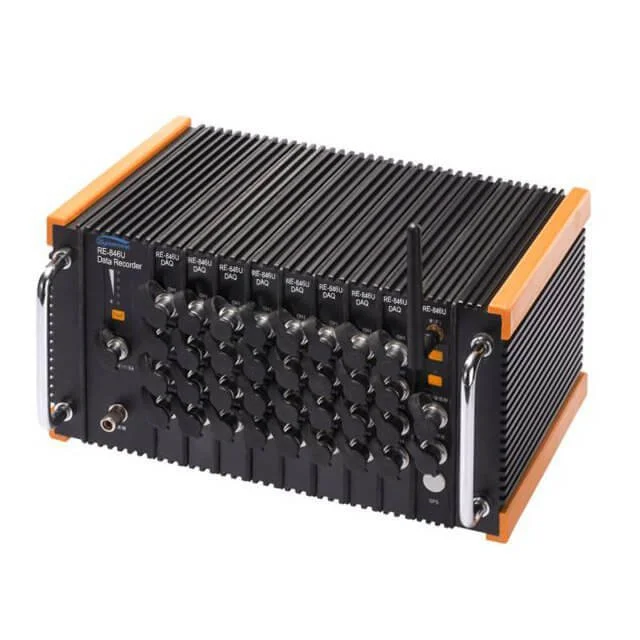
The RE-846U is suitable for harsh-environment field testing where engineers need a rugged DAQ system with real-time acquisition, standalone storage, signal conditioning, sensor flexibility, and multi-parameter measurement.
Best suited for:
On-vehicle testing
Airborne testing
Shipboard testing
Infrastructure monitoring
Railway testing
Mechanical engineering tests
Long-term unattended monitoring
Strain, vibration, pressure, torque, voltage, charge, temperature, and IEPE sensor acquisition
RE-816U Rugged Dynamic Signal Test and Analysis System

The RE-816U is suitable for extreme shock, blast, and transient dynamic testing where engineers need high-speed acquisition and rugged operation.
Best suited for:
Shock testing
Blast testing
High-speed transient events
Defense testing
Aerospace testing
Automotive impact testing
Mechanical dynamic testing
Standalone SSD recording and post-test recovery
Rugged Sensors and Accessories
A rugged DAQ system is only as reliable as the full measurement chain.
Dynatronic can support rugged and harsh-environment testing with sensors and accessories such as:
Accelerometers
Piezoelectric sensors
Strain gauges
Strain rosettes
Pressure sensors
Displacement sensors
Temperature sensors
Force sensors
Torque sensors
Cables and signal conditioning modules
Common Mistakes When Choosing a Rugged DAQ System
-
Channel count matters, but it is not enough. Engineers must also check ruggedness, sensor conditioning, synchronization, storage, power, and data recovery.
-
A system may meet the signal requirements but fail to fit inside the aircraft, vehicle, capsule, machinery, or test article.
-
Standard DAQ systems may not withstand shock, vibration, temperature, humidity, or mobile operation.
-
Some field tests cannot maintain a computer connection. Offline or standalone recording may be essential.
-
For one-time tests, backup storage and data recoverability should be discussed before the test.
-
Battery life, power stability, and operating duration can affect the success of the test.
-
If strain, vibration, pressure, temperature, and acceleration are not synchronized, post-test analysis becomes harder.
-
Good rugged DAQ software should support setup, monitoring, playback, analysis, export, and reporting.
Common Engineering Questions About Rugged DAQ and Field Data Recording
-
A rugged DAQ system is a data acquisition system designed to capture sensor data reliably in harsh field environments such as vehicle tests, flight tests, shock tests, impact tests, shipboard tests, outdoor monitoring, and high-vibration conditions.
-
A rugged DAQ system usually focuses on acquiring and analyzing data, often with real-time display and software control. A rugged data recorder is often designed for compact, standalone, or offline recording where data must be stored internally and recovered after the test. Some systems can perform both functions.
-
Engineers should use a rugged data recorder when the test involves shock, vibration, movement, limited installation space, harsh environmental conditions, or no reliable computer connection during the test.
-
Depending on the system configuration, rugged DAQ systems can measure strain, vibration, shock, acceleration, pressure, temperature, displacement, torque, voltage, charge signals, noise, overload, and other dynamic or environmental parameters.
-
Standalone recording allows the system to collect and store data without a connected computer. This is important in flight testing, vehicle testing, transport monitoring, spacecraft testing, and field environments where continuous communication is not practical.
-
Harsh tests can expose equipment to shock, vibration, power interruption, or communication failure. Backup storage and data recovery functions help protect critical test data, especially during one-time or expensive tests.
-
Engineers should check shock resistance, vibration resistance, environmental rating, installation space, channel count, sensor support, sampling rate, synchronization, storage, power supply, operation mode, software, and data recovery options.
-
Yes. Rugged DAQ systems and data recorders are commonly used for flight testing because they can capture vibration, strain, pressure, temperature, displacement, noise, and other signals under airborne conditions.
-
Yes. Rugged vehicle data recorders can support road testing, NVH testing, powertrain testing, gearbox vibration analysis, structural monitoring, and durability testing.
-
Dynatronic can help engineers review the test environment, sensor types, channel count, sampling rate, installation space, synchronization needs, power requirements, and data protection strategy to configure a rugged DAQ or data recorder for the application.
In Harsh Field Testing, the Data Must Survive the Test
Rugged DAQ and rugged data recorders are used when normal laboratory measurement systems are not suitable for the test environment.
In aerospace, vehicle-borne, defense, transportation, mechanical, civil engineering, and field testing, engineers may need to capture strain, vibration, shock, pressure, temperature, acceleration, noise, torque, displacement, and other signals under difficult conditions.
The right rugged DAQ system should provide more than accurate measurement. It should offer shock resistance, vibration resistance, environmental protection, compact installation, sensor flexibility, reliable power, synchronized channels, standalone recording, data backup, and practical software for analysis.
For harsh field testing, the most important data often appears during the most difficult moment. The measurement system must be ready for it.
Need rugged DAQ or data recording for aerospace, vehicle, transport, defense, machinery, impact, or harsh field testing?
Talk to Dynatronic about your test object, environment, signal types, channel count, sampling rate, installation space, power conditions, and data protection needs. Our team can help you identify the right rugged DAQ system, data recorder, sensors, and software workflow for your application.