
Wireless Strain and Torque Measurement: When Cable Cannot Go

Some of the most important engineering data is found exactly where cables cannot go.
A rotating shaft.
A helicopter rotor blade.
A moving vehicle component.
A large mechanical structure.
A field test setup.
A high-speed engine test.
A hard-to-access point inside a machine.
In these situations, traditional wired measurement can become difficult, unreliable, or impossible. Cables may interfere with movement, affect signal quality, create safety risks, or make installation too complex. Slip rings can help in some rotating applications, but they also add mechanical complexity, maintenance needs, and possible signal transmission issues.
This is where wireless strain and torque measurement becomes valuable.
A wireless strain measurement system allows engineers to capture strain, torque, vibration, temperature, or other dynamic signals directly from moving, rotating, or hard-to-wire components. The data can then be transmitted wirelessly to a receiver, computer, or data acquisition system for real-time monitoring, recording, and analysis.
For aerospace, automotive, powertrain, machinery, civil engineering, energy, and research applications, wireless measurement is not only about removing cables. It is about making difficult measurements possible.
Direct Answer: What Is Wireless Strain and Torque Measurement?
Wireless strain measurement uses strain gauges, wireless recording modules, power modules, telemetry, receivers, and software to measure strain from components where wired data acquisition is difficult.
Wireless torque measurement usually measures torsional strain on a shaft. Strain gauges are bonded to the shaft in a bridge configuration that responds to twisting deformation. The wireless module captures the strain signal, digitizes it, and transmits it to a stationary receiver. Software then converts the strain signal into torque values for engineering analysis.
This method is especially useful for:
Rotating shafts
Engine main shafts
Helicopter rotors
Motors and powertrain components
Transmission systems
Vehicle road-load testing
Large moving structures
Field-based structural tests
Hard-to-wire machinery
Temporary measurement setups
Components where cables may affect motion or safety
When correctly configured, wireless strain and torque measurement helps engineers capture real operating data from places where traditional wired systems cannot be used effectively.
Why Engineers Need Wireless Measurement
Many engineering teams start with a simple problem: “We need to measure strain or torque, but we cannot run cables.”
That problem may sound practical, but it has serious technical consequences.
In structural and dynamic testing, engineers need data from the exact location where the load, movement, or deformation happens. If they cannot measure that point correctly, they may be forced to rely on indirect data, assumptions, or incomplete test results.
Wireless measurement helps solve this problem by placing the measurement system closer to the sensor and transmitting the data without a physical signal cable between the moving part and the stationary test station.
This is useful when the test object is:
Rotating
Moving
Large
Remote
Difficult to access
Exposed to field conditions
Installed in a limited space
Sensitive to cable stiffness
Unsafe for long cable routing
Part of a temporary test setup
Operating under real load conditions
In these applications, wireless measurement gives engineers a better chance to capture data from the real operating condition, not only from a simplified laboratory setup.
Common Problems with Wired Measurement
Wired data acquisition is still the right choice for many tests. It is stable, familiar, and widely used. But it becomes difficult when the measurement point moves, rotates, or cannot be reached easily.
1. Cables can interfere with movement
On rotating shafts, motors, rotors, wheels, and moving mechanisms, cables can twist, pull, restrict motion, or fail during operation.
Even when the cable does not fail, it may affect the movement of the part being tested.
2. Cable routing can become too complex
Large structures may require long cable runs from each sensor to the DAQ system. This increases setup time, weight, installation complexity, and the risk of wiring errors.
3. Long cables can reduce signal quality
Strain signals are very small. Long cables can introduce noise, resistance effects, grounding problems, and signal instability.
This is especially important when measuring microstrain or small dynamic responses.
4. Moving parts create safety risks
In rotating machinery and powertrain testing, loose cables can become dangerous. They may wrap around the shaft, hit nearby components, or fail during high-speed operation.
5. Field tests are harder to control
Vehicle, structural, outdoor, or field-based testing often involves changing conditions, limited access, and installation constraints. Cabled systems may not be practical in these environments.
6. Test setup time increases
Cabling, labeling, fixing, protecting, and checking long wire runs can take significant time. In temporary test campaigns, this can slow down the entire project.
Wireless data recording systems help reduce these problems by shortening the physical distance between the sensor and the acquisition module, while removing the need for long signal cables back to the test station.
Why Slip Rings Are Not Always the Best Answer
For rotating shaft strain measurement, one traditional solution is the slip ring.
A slip ring allows electrical signals to pass from a rotating part to a stationary system. It can be useful in some applications, but it is not always the most practical or reliable option.
Engineers may face problems such as:
Mechanical wear
Signal noise
Contact instability
Installation complexity
Maintenance requirements
Limited space on the rotating assembly
Speed limitations
Channel limitations
Added rotating mass
Difficulty using the system in harsh environments
For some high-speed, high-value, or complex rotating tests, wireless telemetry can be more suitable because it removes the physical contact point between rotating and stationary parts.
That does not mean slip rings are always wrong. It means engineers should compare the full test requirement before choosing.
For rotating shaft strain and torque measurement, the key question is:
Can the signal be captured accurately and reliably without affecting the rotating component or increasing test risk?
If the answer is difficult with cables or slip rings, wireless measurement should be considered.
How Wireless Strain Measurement Works
A wireless strain measurement setup usually includes several parts working together.
1. Strain gauges
Strain gauges are installed directly on the test component. They measure deformation by changing electrical resistance as the structure stretches, compresses, bends, or twists.
For torque measurement on a rotating shaft, strain gauges are usually installed in a configuration sensitive to torsional strain.
2. Bridge configuration
The strain gauges are connected in a bridge circuit, such as a quarter bridge, half bridge, or full bridge.
For torque measurement, full-bridge arrangements are often used because they can improve sensitivity and compensation when measuring torsion.
3. Wireless data recording module
The wireless module is installed close to the measurement point. In rotating applications, it may be mounted directly on the shaft or rotating structure.
The module captures the analog strain gauge signal and converts it into digital data.
4. Power module or battery
The wireless system needs power. Depending on the application, this may come from batteries, power modules, inductive power, or other power supply arrangements.
Power planning is important because the test duration, sampling rate, transmission distance, and number of channels all affect energy requirements.
5. Wireless transmission
The measured data is transmitted wirelessly to a stationary receiver or base station.
Transmission stability is critical. Engineers need to consider distance, obstacles, speed of the rotating part, electromagnetic conditions, and possible signal interruptions.
6. Receiver or base station
The receiver collects the wireless data and sends it to the computer or DAQ platform.
For multi-channel or multi-module testing, the receiver must support synchronized acquisition and stable communication.
7. Software and analysis
Software displays, records, processes, and analyzes the data.
For torque measurement, the software may convert strain signals into torque values using calibration factors, shaft geometry, material properties, or torque calculation modules.
A complete workflow should help engineers move from raw wireless strain data to usable engineering insight.
Wireless Torque Measurement on Rotating Shafts
Torque measurement on a rotating shaft is one of the clearest use cases for wireless strain measurement.
Torque is the twisting force transmitted through a shaft. In engines, motors, drivetrains, turbines, gearboxes, and rotating machinery, torque data helps engineers understand how power is transferred and whether the shaft is operating within safe limits.
A wireless torque measurement setup may be used to answer questions such as:
How much torque is transmitted during operation?
Does torque change during acceleration, deceleration, load change, or startup?
Are there torque peaks that could affect fatigue life?
Is the shaft experiencing unexpected torsional vibration?
Does the measured torque match the design or simulation model?
Are there differences between test bench and real operating conditions?
Is the component safe for qualification or production?
To measure torque, strain gauges are installed on the shaft to detect torsional strain. The wireless data recording module captures the bridge signal and transmits it to the receiver. Software then processes the signal and converts it into torque data.
When to Use Wireless Strain and Torque Measurement
Wireless strain and torque measurement is not necessary for every test. But it becomes highly valuable when wired measurement creates technical or practical problems.
Use wireless measurement when the part rotates
Examples:
Engine shafts
Motor shafts
Gearbox shafts
Drive shafts
Helicopter rotors
Turbine components
Fans and rotating blades
In these applications, cable routing is often impractical or unsafe.
Use wireless measurement when the part moves
Examples:
Vehicle suspension components
Moving mechanical arms
Test rigs with moving structures
Railway components
Heavy machinery parts
Wireless recording helps reduce cable restrictions and allows the part to move more naturally.
Use wireless measurement when the structure is large
Examples:
Bridges
Large mechanical structures
Aircraft structures
Civil engineering structures
Large industrial equipment
Wireless modules can be installed near measurement points, reducing long cable runs and simplifying the system layout.
Use wireless measurement for field testing
Examples:
Vehicle road tests
Outdoor structure monitoring
Aerospace ground tests
Machinery testing on-site
Temporary test campaigns
Wireless systems can make field testing faster and more flexible.
Use wireless measurement when installation space is limited
Some tests have very little room for cables, slip rings, or large instrumentation. Compact wireless modules can help engineers install measurement systems in constrained spaces.
Use wireless measurement when data must be captured under real operating conditions
In many applications, the most useful data comes from real operation, not from a simplified bench test. Wireless measurement helps engineers collect data while the component behaves closer to its actual working condition.
Wireless Measurement Applications by Industry
Aerospace
Aerospace is one of the strongest application areas for wireless strain and torque measurement.
Typical applications include:
Aero-engine shaft torque measurement
Helicopter rotor telemetry
Turbine and rotor testing
Flight-related structural testing
Rocket launch environment testing
Rotating component strain measurement
Large-scale structural validation
Harsh-environment data recording
Aerospace testing often involves high-speed motion, limited space, strict safety requirements, and difficult access. Wireless measurement helps engineers capture data from locations where standard cabling is not practical.
Automotive and Powertrain
Automotive engineers use wireless measurement for moving and rotating components where real operating load data is needed.
Typical applications include:
Drive shaft torque measurement
Electric motor testing
Powertrain validation
Suspension strain measurement
Road-load data acquisition
Vehicle durability testing
NVH-related dynamic measurement
Rotating component strain measurement
Wireless measurement helps teams capture strain, torque, vibration, and load data during real motion, road conditions, or dynamic operation.
Mechanical Equipment and Rotating Machinery
Machinery testing often requires measurement on shafts, rotating assemblies, moving arms, or structural components.
Typical applications include:
Torque measurement on rotating shafts
Gearbox testing
Motor and pump validation
Large machinery strength evaluation
Dynamic stress measurement
Fatigue testing
Rotating blade measurement
Equipment troubleshooting
Wireless measurement helps engineers collect data directly from the working component, improving test accuracy and reducing installation limitations.
Civil Engineering and Large Structures
Wireless strain measurement is also useful for large structures, especially when measurement points are far apart.
Typical applications include:
Bridge strain monitoring
Structural load testing
Large mechanical structure testing
Civil infrastructure monitoring
Tower and support structure testing
Temporary field measurements
Distributed structural measurement
Wireless systems can reduce long cable runs and make installation faster, especially when the structure is difficult to access.
Energy and Research
Energy and research applications often require custom measurement setups.
Typical applications include:
Wind turbine component testing
Rotating equipment monitoring
Power generation machinery
Laboratory research
Structural dynamics studies
Materials testing
Experimental mechanics
High-speed dynamic measurement
Wireless data recording gives researchers more flexibility when standard wiring limits the test design.
What Engineers Should Check Before Choosing a Wireless Data Recording System
Not all wireless measurement systems are the same. Before choosing a system, engineers should define the test requirement clearly.
1. Measurement type
What do you need to measure?
Strain
Torque
Vibration
Temperature
Acceleration
Speed
Pressure
Force
Displacement
Dynamic signals
A system used only for strain may not be enough if the test also needs vibration, speed, or temperature.
2. Number of channels
How many channels are needed?
Consider:
Number of strain gauges
Number of bridge circuits
Number of rotating measurement points
Additional sensors
Future expansion
Redundancy for critical locations
For rotating shaft torque measurement, a few channels may be enough. For structural testing, many channels may be required.
3. Bridge support
For strain measurement, confirm support for the required bridge configuration.
Check whether the system supports:
Quarter bridge
Half bridge
Full bridge
Bridge completion
Stable excitation
Different gauge resistances
Torque bridge arrangements
4. Sampling rate
Sampling rate must match the event.
Static or slow-changing strain may not require very high sampling. Dynamic torque, vibration-related strain, rotor behavior, impact, or transient events may require faster acquisition.
Ask:
What is the maximum frequency of interest?
Are there transient events?
Are torque peaks expected?
Does every channel sample at the required rate?
Is synchronous sampling available?
5. Synchronization
Wireless data must still be synchronized.
This is especially important when comparing:
Strain and torque
Torque and speed
Vibration and strain
Temperature and strain
Multiple wireless modules
Wireless data and wired DAQ data
Sensor data and test machine data
If timing is not controlled, the data may be difficult to interpret.
6. Transmission distance and reliability
Wireless communication depends on the test environment.
Check:
Required transmission distance
Line of sight
Rotation speed
Obstacles
Metal structures nearby
Electromagnetic interference
Signal drop risk
Need for relays or repeaters
Data buffering or backup options
For critical tests, transmission stability and data protection should be discussed early.
7. Power supply and test duration
Wireless systems need reliable power.
Ask:
How long will the test run?
What is the power source?
Can batteries support the full test duration?
Is continuous power possible?
Can the system handle high sampling rates without reducing operating time too much?
Is inductive or wireless power needed for rotating systems?
Power planning is especially important for long-duration or difficult-to-access tests.
8. Size, weight, and mounting
The wireless module must be installed safely without affecting the test.
For rotating components, consider:
Module size
Module weight
Balance of the rotating assembly
Mounting method
Centrifugal force
Space constraints
Protection from vibration or heat
Safety during high-speed operation
A wireless system should solve installation problems, not create new ones.
9. Environmental conditions
Check whether the system can handle:
Temperature
Humidity
Vibration
Shock
Dust
Oil
Outdoor exposure
Field conditions
Electrical noise
Aerospace or automotive test environments
For harsh field testing, rugged data recorders or protected wireless modules may be needed.
10. Software and torque calculation
For wireless torque measurement, software is critical.
The system should support:
Real-time display
Data recording
Channel setup
Bridge configuration
Calibration factors
Torque calculation
Data export
Multi-channel comparison
Alarm or threshold setup
Report generation
Integration with other test data
The goal is not only to receive wireless data. The goal is to turn the data into useful engineering decisions.
Wireless Strain Measurement vs Wired DAQ vs Slip Rings
| Method | Best for | Main advantage | Main limitation |
|---|---|---|---|
| Wired DAQ | Fixed structures, lab testing, stable setups | Reliable, direct connection, widely used | Difficult for rotating or moving parts |
| Slip ring | Some rotating systems | Allows signal transfer from rotating to stationary parts | Mechanical wear, noise, maintenance, installation complexity |
| Wireless strain measurement | Rotating, moving, hard-to-wire, field-based components | Removes long cables and physical signal transfer problems | Requires wireless stability, power planning, and careful mounting |
The best choice depends on the test.
A fixed structural test may work best with a wired DAQ system.
A simple rotating test may use a slip ring.
A high-speed, hard-to-wire, moving, or field-based test may be better suited to wireless measurement.
For complex applications, Dynatronic can help engineers compare these options and configure a measurement system around the actual test requirement.
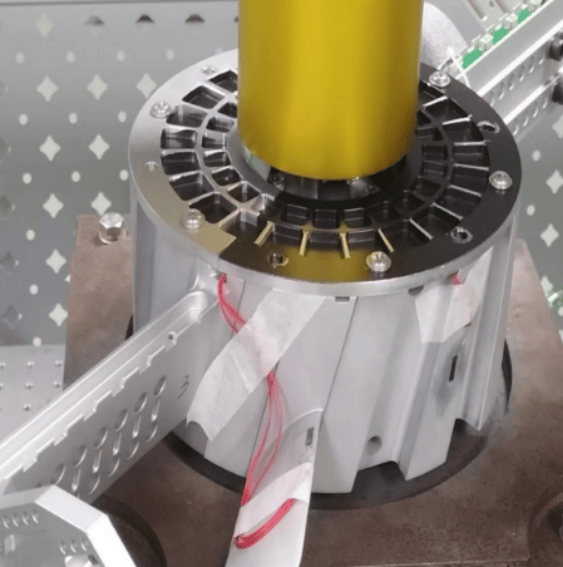
Example: Wireless Strain and Torque Testing on an Aero-Engine Shaft
Aero-engine shaft testing is a strong example of why wireless measurement matters.
In this type of application, engineers may need to measure strain and torque directly on a rotating main shaft during operation. The shaft is moving at high speed, the environment is demanding, and traditional wiring is not practical.
A wireless measurement setup may include:
Torque strain gauges installed directly on the shaft
Wireless data recording modules mounted on the shaft
Power modules for operation during testing
A stationary receiver or base station
Software for real-time display, storage, and torque calculation
This allows the test team to capture strain and torque data from the rotating shaft without using long cables or relying on complex slip-ring transmission.
The result is direct measurement from the component under real operating conditions.
For aerospace propulsion testing, this kind of data can help engineers:
Validate shaft performance
Understand torque transfer
Assess structural integrity
Identify unexpected load behavior
Support engine development
Improve confidence in design decisions
Example: Helicopter Rotor Wireless Telemetry
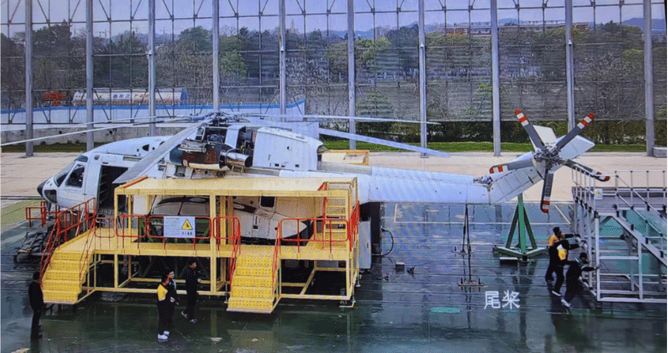
Helicopter rotor testing is another application where wireless measurement is highly valuable.
Rotors are rotating, exposed to complex loads, and difficult to instrument with traditional wiring. Engineers may need to measure dynamic strain, torsional load, acceleration, vibration spectra, temperature, and bending moments during operational conditions.
Wireless systems make it possible to capture data from rotating rotor components while transmitting the data to a stationary system for analysis.
This type of measurement can support:
Rotor performance testing
Load analysis
Vibration diagnosis
Structural validation
Fatigue assessment
Safety-related research
Design improvement
Example: Wireless Measurement in Harsh Aerospace Testing
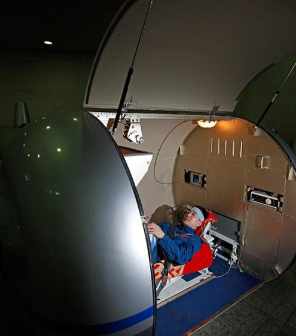
Wireless measurement can also support demanding aerospace tests where standard wiring is not practical due to the environment, test dynamics, or installation constraints.
Examples include:
Fan Blade Out testing
Rocket launch environment testing
Astronaut centrifuge vibration diagnosis
Flight-related structural testing
High-speed rotating system validation
In these situations, data quality and reliability are critical because the test may be expensive, complex, or difficult to repeat.
A wireless data recording system should therefore be selected not only for transmission ability, but also for synchronization, durability, signal integrity, power reliability, and software workflow.
Common Mistakes When Choosing a Wireless Measurement System
Mistake 1: Thinking wireless only means “no cables”
Wireless measurement is not just about convenience. It must still deliver accurate, synchronized, reliable engineering data.
Mistake 2: Ignoring power requirements
A wireless system that cannot operate for the full test duration may cause data loss. Power planning should be part of the system design.
Mistake 3: Forgetting rotating balance and mounting safety
On rotating shafts or blades, module weight, placement, and mounting method can affect safety and measurement quality.
Mistake 4: Underestimating wireless transmission challenges
Distance, speed, metal structures, electromagnetic noise, and obstacles can affect wireless communication.
Mistake 5: Separating torque data from other signals
Torque data becomes more useful when compared with speed, strain, vibration, temperature, or load data on the same timeline.
Mistake 6: Choosing a system without proper bridge support
Strain and torque measurement require correct bridge configuration, stable excitation, and clean signal conditioning.
Mistake 7: Treating software as an afterthought
For torque calculation and engineering analysis, software is not optional. It is part of the measurement system.
Wireless Strain and Torque Measurement Selection Checklist
Use this checklist before choosing a wireless data recording system.
| Selection factor | What to check | Why it matters |
|---|---|---|
| Test object | Shaft, rotor, moving component, structure, vehicle, machinery | Defines installation and system architecture |
| Measurement type | Strain, torque, vibration, temperature, acceleration | Confirms sensor and module compatibility |
| Channel count | Current and future measurement points | Prevents system limitations |
| Bridge support | Quarter, half, full bridge, torque bridge setup | Ensures strain gauge compatibility |
| Sampling rate | Static, dynamic, transient, vibration-related strain | Captures the real event accurately |
| Synchronization | Wireless modules, wired DAQ, speed, load, temperature | Allows meaningful signal comparison |
| Transmission distance | Line of sight, obstacles, relay needs | Protects data continuity |
| Power supply | Battery life, power module, inductive power, test duration | Avoids data loss during operation |
| Mounting | Size, weight, balance, centrifugal force, safety | Prevents mechanical or safety issues |
| Environment | Heat, vibration, shock, humidity, EMI, field conditions | Ensures reliable operation |
| Software | Real-time display, torque calculation, export, reporting | Turns raw data into useful results |
| Support | Application review and configuration help | Reduces selection and setup risk |
Recommended Dynatronic Solutions
Dynatronic provides wireless data recording systems, strain measurement solutions, rugged recorders, DAQ systems, sensors, and software for demanding engineering tests.
WW-844D Wireless Dynamic Strain Test and Analysis System
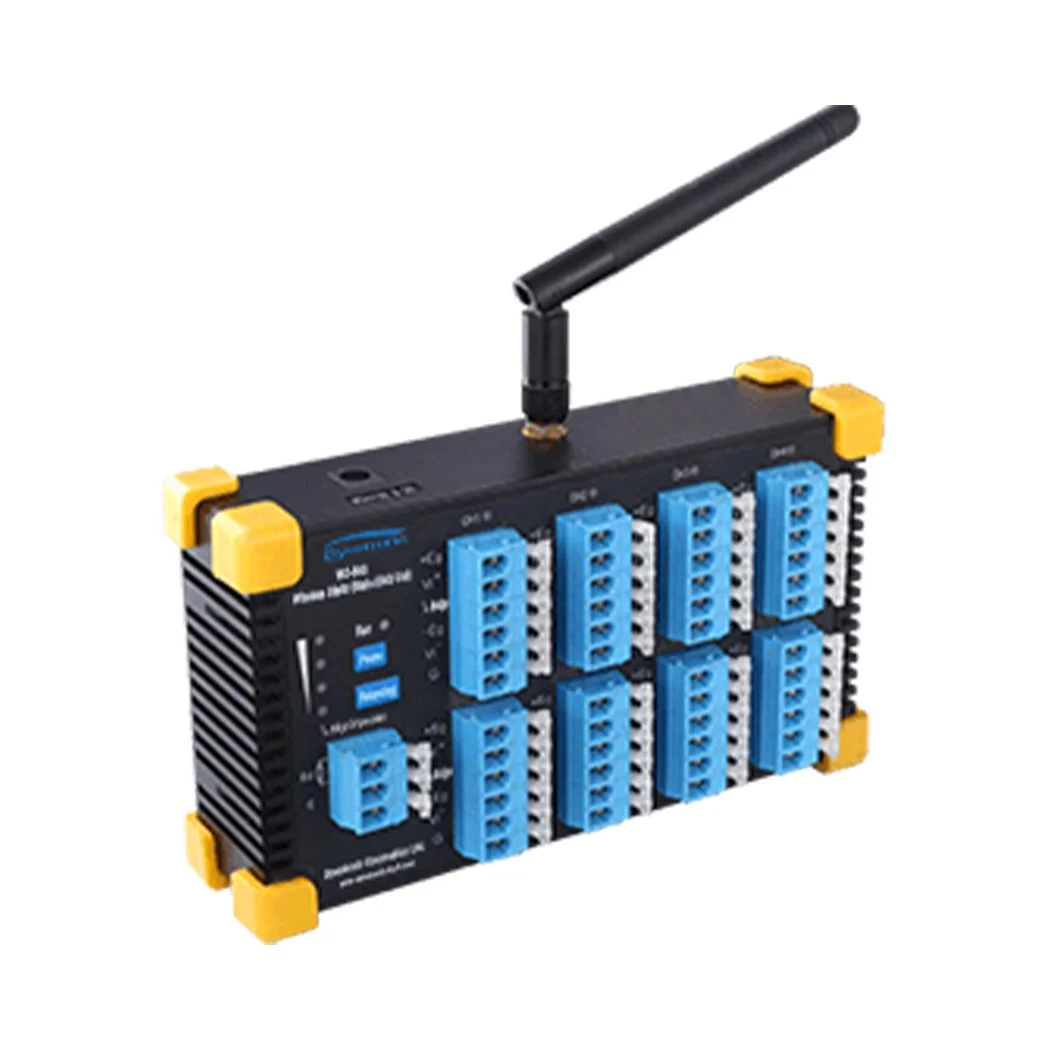
The WW-844D is suitable for wireless dynamic strain testing and strength/life evaluation of large mechanical structures.
It is useful for:
Wireless strain measurement
Large mechanical structure testing
Civil engineering structures
Bridge engineering
Automotive applications
Aerospace applications
Dynamic stress-strain testing
Distributed wireless measurement
Rugged Recorders
Rugged recorders are suitable for field testing, mobile measurement, harsh environments, and critical data recording applications where shock, vibration, movement, or environmental stress may be present.
They are useful for:
Field testing
Aerospace testing
Vehicle testing
Harsh-environment DAQ
Mobile data recording
Backup data capture
Flight-related measurement
Impact and dynamic testing
Data Acquisition Systems and Sensors
Wireless measurement may also need to integrate with wired DAQ systems, accelerometers, force sensors, pressure sensors, displacement sensors, temperature sensors, or speed sensors.
A complete measurement workflow can combine:
Wireless data recording
Strain gauge measurement
Dynamic DAQ
Rugged recording
Sensors
Software
Engineering support
Why Dynatronic for Wireless Strain and Torque Measurement?
Wireless measurement applications are rarely solved by selecting a product from a catalog.
Engineers usually need to consider the test object, rotation speed, strain gauge placement, bridge configuration, module mounting, transmission distance, power supply, sampling rate, synchronization, software, and environmental conditions.
Dynatronic supports this process with measurement systems and application experience across aerospace, automotive, civil engineering, machinery, energy, and research applications.
Dynatronic’s wireless measurement solutions can help engineering teams:
Capture strain and torque from rotating components
Reduce cable complexity
Measure hard-to-wire structures
Support field and mobile testing
Improve test setup flexibility
Combine wireless and wired measurement data
Record dynamic signals in real time
Turn raw strain signals into torque values
Support product validation and structural analysis
The goal is simple: Capture reliable data from the place where the measurement actually matters.
Conclusion: Wireless Measurement Makes Difficult Data Possible
Wireless strain and torque measurement is valuable when traditional wired systems cannot reach the measurement point safely, reliably, or practically.
For rotating shafts, moving parts, large structures, field tests, and harsh engineering environments, wireless data recording systems can help engineers collect real operating data without forcing the test around cable limitations.
But the system must be chosen carefully.
Engineers should evaluate measurement type, channel count, bridge support, sampling rate, synchronization, transmission distance, power supply, module mounting, environmental conditions, and software workflow before selecting a wireless measurement solution.
Dynatronic helps engineering teams configure wireless strain, torque, and dynamic signal measurement systems for real test conditions, from rotating aerospace shafts and helicopter rotors to large structures, vehicle testing, machinery, and field measurement.
Need to measure strain, torque, vibration, or dynamic signals where cables cannot go?
Talk to Dynatronic about your rotating shaft, moving component, hard-to-wire structure, or field test setup. Our team can help you choose the right wireless data recording system, sensors, power solution, receiver, DAQ workflow, and analysis software for your application.
Common Engineering Questions About Wireless Strain and Torque Measurement
-
Wireless strain measurement captures strain gauge signals using a wireless data recording module installed near the measurement point. The data is transmitted wirelessly to a receiver or computer for real-time monitoring, recording, and analysis.
-
Wireless torque measurement usually uses strain gauges installed on a rotating shaft in a torsion-sensitive bridge configuration. A wireless module captures the strain signal and transmits it to a receiver. Software then converts the strain data into torque values.
-
Engineers should use wireless strain measurement when cables are difficult, unsafe, or impossible, such as rotating shafts, moving components, vehicle tests, large structures, field testing, or hard-to-access measurement points.
-
Rotating shafts make cable routing difficult and risky. Wireless measurement allows strain or torque data to be captured directly from the rotating shaft without long signal cables or complex slip-ring transmission.
-
Slip rings transfer signals through physical contact between rotating and stationary parts. Wireless strain measurement transmits data without that physical contact, reducing mechanical wear, installation complexity, and some signal transfer issues.
-
Yes. Torque can be calculated from torsional strain when strain gauges are installed correctly on the shaft and the software is configured with the right calibration and calculation method.
-
Check the measurement type, channel count, bridge support, sampling rate, synchronization, transmission distance, power supply, module size, mounting method, environment, and software capability.
-
Yes. Wireless strain and torque measurement is useful in aerospace applications such as aero-engine shaft testing, helicopter rotor telemetry, Fan Blade Out testing, rocket launch environment testing, and rotating component measurement.
-
Yes. Automotive applications can include powertrain testing, drive shaft torque measurement, suspension strain measurement, vehicle road-load testing, moving component validation, and durability testing.
-
Yes. Many tests combine wireless measurement from moving or rotating parts with wired DAQ from fixed sensors. Synchronization is important so all data can be compared on the same timeline.
-
Relevant Dynatronic solutions include the WW-844D Wireless Dynamic Strain Test and Analysis System, wireless data recording systems, rugged recorders, data acquisition systems, strain gauge measurement systems, sensors, and analysis software.
-
Dynatronic can help engineers review the test object, rotation or movement, channel count, strain gauge layout, bridge type, sampling rate, transmission requirements, power supply, mounting method, and software workflow to configure the right wireless measurement setup.