
How to Choose a DAQ System for Aerospace Testing

Choosing a DAQ system for aerospace testing starts with one question:
What data must be captured accurately, synchronously, and reliably under real aerospace test conditions?
For aerospace engineers, a data acquisition system is not just a recording device. It is the measurement backbone behind structural validation, vibration testing, strain analysis, wind tunnel testing, aero-engine research, modal testing, and flight-related performance studies.
The right aerospace data acquisition system should support the required channel count, sampling rate, sensor types, synchronization method, signal conditioning, environmental durability, and analysis workflow. If any of these areas are weak, the test may produce incomplete, delayed, noisy, or unreliable data.
This guide explains what engineers should evaluate when selecting a DAQ system for aerospace testing, especially for demanding applications such as aircraft structural testing, aero-engine vibration measurement, wind tunnel DAQ, and high-speed dynamic signal analysis.
Why DAQ System Selection Matters in Aerospace Testing
Aerospace testing often involves high-value structures, complex loading conditions, and limited test windows. Once a test starts, the system must capture every critical response without missing transient events or losing synchronization between channels.
In aerospace applications, DAQ systems are commonly used to measure:
Vibration
Strain
Acceleration
Pressure
Temperature
Displacement
Acoustic response
Rotational or engine-related dynamic signals
Structural fatigue behavior
Modal response
Impact or transient events
A poor DAQ selection can lead to unreliable test data, repeated testing, unclear failure analysis, or difficulty correlating physical test results with simulation models.
A good aerospace DAQ system helps engineers answer practical questions such as:
How does the structure respond under dynamic loading?
Where are the fatigue-prone areas?
Are natural frequencies and damping ratios within safe limits?
How does a component behave under high temperature, vibration, or pressure?
Can the measured results validate the simulation model?
Is the aircraft or component ready for further qualification?
1. Start with the Aerospace Test Type
The first step is to define the test environment and measurement goal.
A DAQ system for aerospace testing may be used in very different scenarios. A wind tunnel DAQ system has different requirements from an aero-engine vibration test. A flight test data acquisition setup has different constraints from a laboratory modal test.
Common aerospace DAQ applications
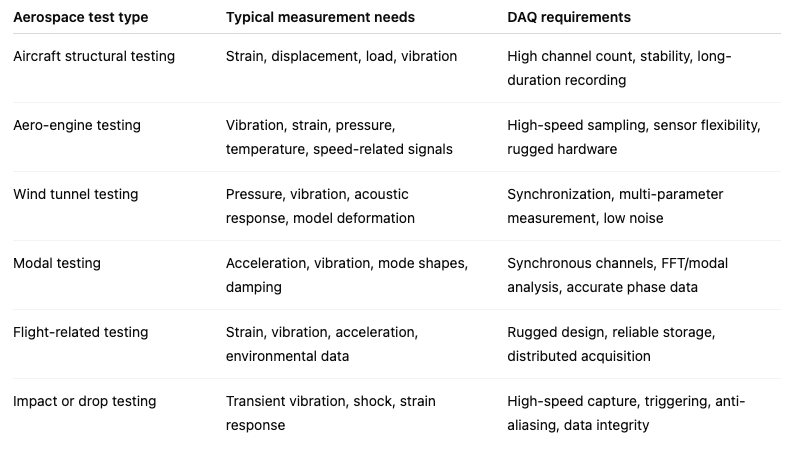
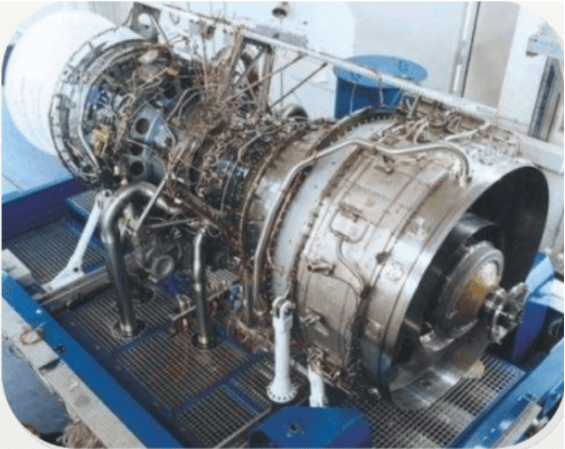
Before selecting the system, define the test case clearly. The DAQ should match the physics of the test, not only the number of channels.
2. Choose the Right Channel Count and Scalability
Aerospace testing can start with a small number of sensors and quickly scale into hundreds or thousands of channels.
For example, a component-level vibration test may need only a few acceleration channels. A full aircraft structural validation program may require strain, vibration, pressure, and temperature data from many measurement points across the fuselage, wings, engine components, or support structures.
When comparing aerospace DAQ systems, check:
How many channels are needed now?
How many channels may be needed later?
Can the system expand without replacing the whole platform?
Can multiple DAQ units be synchronized?
Can the system handle distributed measurement points?
Can it support both small lab tests and large-scale field tests?
For large structures, modular and distributed DAQ architecture is often useful because sensors may be spread across wide physical areas. This reduces cabling complexity and allows engineers to place acquisition hardware closer to the measurement points.
Dynatronic’s DE-884U, for example, is designed with a distributed modular architecture and supports multi-channel synchronous testing through Ethernet-based expansion. This makes it suitable for large-scale structure testing where vibration and stress/strain signals need to be acquired in parallel.
3. Match the Sampling Rate to the Dynamic Event
Sampling rate is one of the most important factors when choosing a high-speed DAQ for aerospace testing.
If the sampling rate is too low, the system may miss fast changes in the signal. This is especially risky in vibration, impact, aero-engine, acoustic, and transient response testing.
Aerospace engineers should evaluate:
The highest frequency of interest
The expected vibration or acoustic bandwidth
Whether transient events must be captured
Whether the system needs continuous or triggered acquisition
Whether every channel can sample at the required speed simultaneously
For dynamic aerospace testing, simultaneous sampling is especially important. If channels are scanned sequentially instead of captured synchronously, phase relationships between measurement points may be distorted. This can affect modal analysis, vibration correlation, and structural response interpretation.
As a practical rule, the DAQ sampling rate should be selected based on the signal bandwidth, anti-aliasing requirements, and the type of analysis to be performed. For modal testing, vibration monitoring, and aero-engine dynamic measurement, engineers should avoid choosing a DAQ system based only on maximum advertised sampling rate. The real question is whether the system can maintain the required sampling performance across the required number of active channels.
4. Check Synchronization Accuracy Between Channels
In aerospace testing, timing matters.
A small synchronization error between channels can affect phase analysis, modal testing, vibration comparison, and multi-point structural response measurement.
This is especially important for:
Ground vibration testing
Wind tunnel model testing
Aeroelastic analysis
Engine vibration testing
Multi-point strain measurement
Large aircraft structural testing
Distributed DAQ systems
When evaluating synchronization, ask:
Are all channels sampled synchronously?
How are multiple DAQ modules synchronized?
Does the system support network-based synchronization?
What is the synchronization error?
Can the system maintain timing accuracy across distributed units?
Is synchronization reliable during long-duration testing?
For example, Dynatronic’s DE-884U supports IEEE 1588 network synchronization, which is important when multiple distributed modules need to work together as one synchronized measurement system.
For large aerospace structures, synchronization is not a minor feature. It directly affects whether engineers can trust the relationship between signals from different parts of the aircraft, engine, or test article.
5. Confirm Sensor Compatibility and Signal Conditioning
Aerospace DAQ systems often need to support multiple sensor types in the same test.
A single aerospace test may include:
IEPE accelerometers
Strain gauges
Pressure sensors
Microphones
Temperature sensors
Displacement sensors
Torque sensors
Rotational speed signals
Bridge-based sensors
Charge sensors
The DAQ system should not only accept the sensor signal. It should also provide the correct signal conditioning.
Key signal conditioning features to check include:
IEPE sensor support
Bridge completion
Excitation voltage
Low-pass filtering
Anti-aliasing filters
Charge conditioning
Input coupling options
Input voltage range
Isolation between channels
Noise performance
TEDS or sensor identification support
This is especially important in aerospace because small signal errors can influence engineering decisions. For example, strain measurement on aircraft structures requires stable excitation, low drift, and accurate bridge measurement. Vibration testing requires clean acceleration signals and proper anti-aliasing. Acoustic and aeroacoustic testing require suitable bandwidth and low noise.
A flexible aerospace data acquisition system should allow engineers to configure channels according to the sensor and test requirement, instead of forcing the test to fit the limitations of the hardware.
6. Consider Ruggedness and Environmental Conditions
Aerospace testing is not always performed in a comfortable lab environment.
DAQ systems may be used near engines, inside test cells, around rotating machinery, in wind tunnels, on aircraft structures, or in field environments where vibration, temperature change, humidity, space limitations, and electrical noise are present.
For aerospace applications, check whether the DAQ system can handle:
Operating temperature range
Humidity conditions
Vibration exposure
Long-duration operation
Stable power supply
Secure data storage
Electromagnetic noise
Cable movement and signal interference
Physical installation constraints
For flight test data acquisition or field testing, rugged recorders and distributed measurement systems may be more suitable than traditional lab-only equipment. For fixed laboratory testing, rackmount systems may be preferred when higher channel density, stable power, and centralized control are needed.
The key is to match the hardware format to the test environment.
7. Evaluate Data Quality, Not Just Data Volume
More channels and faster sampling do not automatically mean better data.
In aerospace testing, data quality depends on the full measurement chain:
Sensor selection
Mounting method
Cabling
Signal conditioning
Sampling rate
Filtering
Synchronization
Noise level
Data storage
Analysis workflow
A good aerospace DAQ system should help engineers capture data that is clean, traceable, and useful for analysis.
Important performance factors include:
Resolution
Accuracy
Stability
Channel isolation
Noise floor
Frequency response
Anti-aliasing performance
Trigger reliability
Long-duration recording stability
Export and reporting capability
For aerospace applications such as aero-engine testing or structural fatigue analysis, data must be trusted after the test is completed. Engineers should be able to review, process, compare, and report results without losing context or spending unnecessary time cleaning unusable data.
8. Decide Between Portable, Distributed, and Rackmount DAQ Systems
The best DAQ form factor depends on the test setup.
Portable DAQ systems
Portable systems are useful for smaller test setups, field measurements, troubleshooting, and flexible lab work. They are easier to move and install near the test article.
Distributed DAQ systems
Distributed systems are useful when measurement points are spread across large structures. They reduce long cable runs and support scalable multi-point testing.
Rackmount DAQ systems
Rackmount systems are often suitable for large laboratory setups, high-channel-count tests, structural testing rigs, and long-duration aerospace validation programs.
Rugged recorders
Rugged data recorders are useful for harsh environments, flight-related measurement, mobile testing, or situations where data capture must continue reliably outside a standard lab setup.
For Dynatronic users, product selection may depend on whether the aerospace test requires portability, high channel density, distributed measurement, rugged operation, or a combination of these factors.
9. Connect DAQ Selection to Aerospace Proof Points
When selecting a DAQ system for aerospace testing, engineers should also look for proven application experience.
Dynatronic’s aerospace application content already shows several real aerospace testing scenarios that can help buyers understand how DAQ systems and measurement instruments are applied in practice.
Relevant examples include:
Aero thin-walled panel operational deflection shape analysis under acoustic excitation
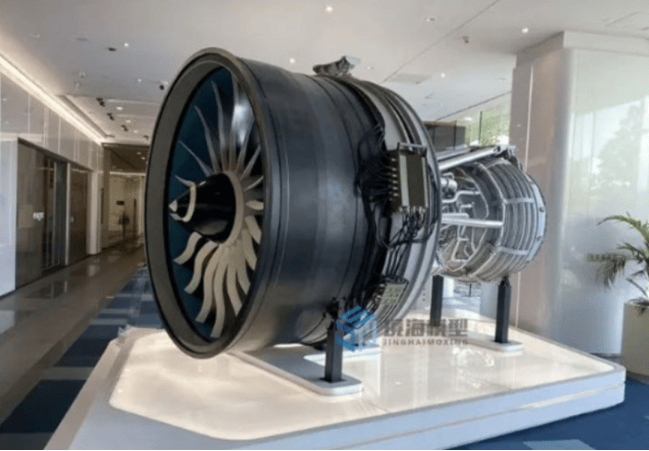
Aero-engine component vibration and strain testing using DE-924U and DE-928U
Full aircraft integrated testing platforms with thousands of channels
These examples are important because aerospace engineers rarely choose a DAQ system based only on a product specification table. They need to know whether the system can support real test conditions, complex structures, and demanding measurement tasks.
10. Use This DAQ Selection Checklist
Before choosing a DAQ system for aerospace testing, use this checklist.

Recommended Dynatronic DAQ Options for Aerospace Testing
The right Dynatronic DAQ system depends on the aerospace test requirement.
DE-944 Dynamic Signal Test and Analysis System
The DE-944 is suitable for demanding aerospace tests that require high-performance dynamic signal acquisition, strain measurement, vibration testing, and structural evaluation. It is a strong option for large-scale structure testing, aero-engine research, and multi-channel laboratory applications.
Best suited for:
Aero-engine vibration monitoring
Structural strength and life evaluation
Dynamic stress/strain testing
Modal and vibration analysis
High-speed aerospace measurement
Rackmount or centralized test setups
DE-924U High-Speed Data Acquisition System
The DE-924U is suitable when high-speed data capture is required for dynamic aerospace events. It can support applications where fast signal changes, vibration behavior, or transient responses must be recorded with accuracy.
Best suited for:
High-speed DAQ for aerospace
Aero-engine component testing
Dynamic vibration and strain measurement
Transient response analysis
Multi-parameter aerospace testing
DE-884U Portable Dynamic Signal Test and Analysis System
The DE-884U is suitable for distributed, modular, and flexible testing setups. Its architecture supports multi-channel synchronous testing, making it useful for large structures and field-style measurement layouts where sensors are spread across different locations.
Best suited for:
Large-scale structural testing
Distributed aerospace DAQ
Multi-point vibration and strain testing
Wind tunnel support measurement
Portable and flexible aerospace testing setups
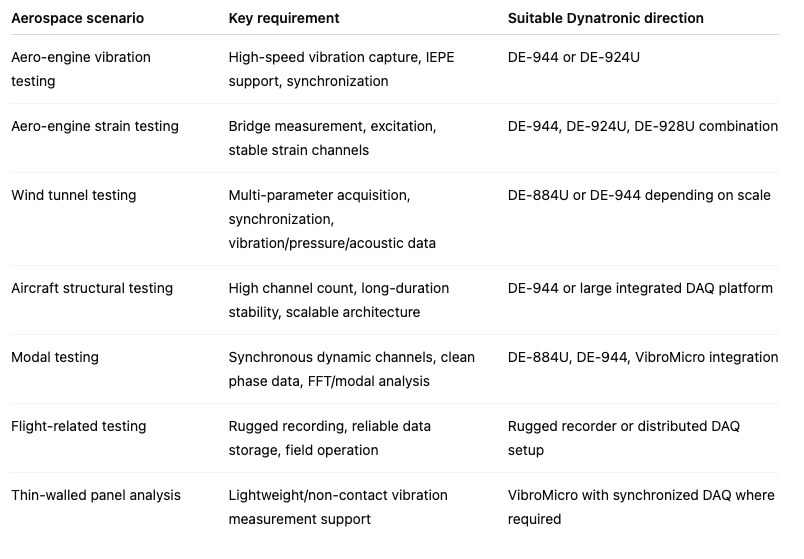
DAQ System Selection by Aerospace Scenario
What Engineers Should Avoid When Choosing an Aerospace DAQ System
Aerospace DAQ selection should not be based only on the highest number in a product datasheet.
Avoid these common mistakes:
Choosing sampling rate without checking channel conditions
Some systems advertise a high maximum sampling rate, but that rate may change when many channels are active. Always check simultaneous sampling performance.
Ignoring synchronization
For vibration, modal, and structural analysis, unsynchronized channels can lead to misleading phase and response data.
Underestimating future channel needs
A small test can grow quickly. Choose a scalable system if the aerospace program may expand.
Treating all sensors the same
Strain gauges, accelerometers, pressure sensors, and microphones require different conditioning. Confirm compatibility before the test.
Forgetting the test environment
A system that works in a lab may not be suitable for field, wind tunnel, engine, or high-vibration environments.
Focusing only on acquisition and not analysis
DAQ does not end when the signal is recorded. Engineers also need real-time monitoring, data management, processing, visualization, export, and reporting.
Why Dynatronic for Aerospace DAQ Applications
Dynatronic provides data acquisition systems, strain measurement solutions, rugged recorders, laser Doppler vibrometers, monitoring instruments, and sensors for aerospace, automotive, civil engineering, research, and industrial testing applications.
For aerospace users, Dynatronic’s value is not only in individual DAQ hardware. It is in the ability to support complex measurement workflows across:
Structural testing
Aero-engine testing
Vibration and strain measurement
Wind tunnel research
Modal testing
Non-contact vibration measurement
Large-scale multi-channel acquisition
Harsh-environment testing
Flight-related data recording
This makes Dynatronic suitable for engineers who need more than a basic DAQ box. They need a measurement system that can support real aerospace test conditions, from small component validation to large integrated aircraft testing.

Conclusion: Choose the DAQ System Around the Test, Not the Datasheet
The best DAQ system for aerospace testing is the one that fits the measurement challenge.
Before choosing, define the test type, required channels, sampling rate, synchronization method, sensor types, environmental conditions, and analysis workflow. Then select a system that can capture accurate, synchronized, and reliable data under the actual test conditions.
For aerospace testing, the right DAQ system should help engineers move from raw signals to confident decisions.
Whether the application involves wind tunnel testing, aero-engine vibration, aircraft structural validation, modal analysis, or flight-related data acquisition, Dynatronic can help configure a DAQ system around the test requirement.
FAQ Section
-
A DAQ system for aerospace testing captures, conditions, synchronizes, records, and analyzes measurement signals from aircraft structures, engines, wind tunnel models, and aerospace components. It is commonly used for vibration, strain, acceleration, pressure, temperature, acoustic, and dynamic response testing.
-
Engineers should first define the test type and measurement goal. A wind tunnel DAQ system, aero-engine vibration setup, structural strain test, modal test, and flight test data acquisition system may all require different channel counts, sampling rates, sensors, synchronization methods, and ruggedness levels.
-
Synchronization ensures that signals from different channels and measurement locations are captured at the correct time relationship. This is critical for modal analysis, vibration testing, distributed strain measurement, aeroelastic research, and multi-point structural response testing.
-
The required sampling rate depends on the highest frequency of interest and the type of event being measured. High-speed DAQ for aerospace applications is often needed for vibration, acoustic, impact, engine, and transient response testing. Engineers should check simultaneous sampling performance across all active channels, not only the maximum sampling rate.
-
Common sensors include accelerometers, strain gauges, pressure sensors, microphones, temperature sensors, displacement sensors, torque sensors, and rotational speed sensors. The DAQ system should provide suitable signal conditioning, excitation, filtering, and input options for each sensor type.
-
Yes, if the DAQ system supports the required input types and signal conditioning. Aerospace tests often combine vibration and strain measurement, especially in structural testing, aero-engine component testing, and fatigue analysis.
-
Portable DAQ systems are easier to move and are suitable for flexible testing, field work, and distributed measurement. Rackmount DAQ systems are often better for high-channel-count laboratory tests, centralized control, and long-duration structural validation programs.
-
A wind tunnel DAQ system should support synchronized multi-channel acquisition, stable signal conditioning, low-noise measurement, and compatibility with pressure, vibration, strain, acoustic, and displacement sensors. It should also support clean data analysis for aerodynamic, structural, and aeroelastic studies.
-
Relevant Dynatronic systems include DE-944 for high-performance dynamic signal and structural testing, DE-924U for high-speed aerospace data acquisition, and DE-884U for portable, modular, distributed, and synchronous multi-channel testing.
-
Dynatronic can help engineers define the right DAQ configuration based on test type, sensor requirements, channel count, sampling rate, synchronization needs, environmental conditions, and analysis workflow. This helps ensure the selected system fits the actual aerospace test setup, not just a general specification.
Need help selecting the right aerospace DAQ setup? Talk to Dynatronic about your test requirements, sensor configuration, channel count, and measurement environment.
