
Torque Sensors for Accurate Rotational Force Measurement
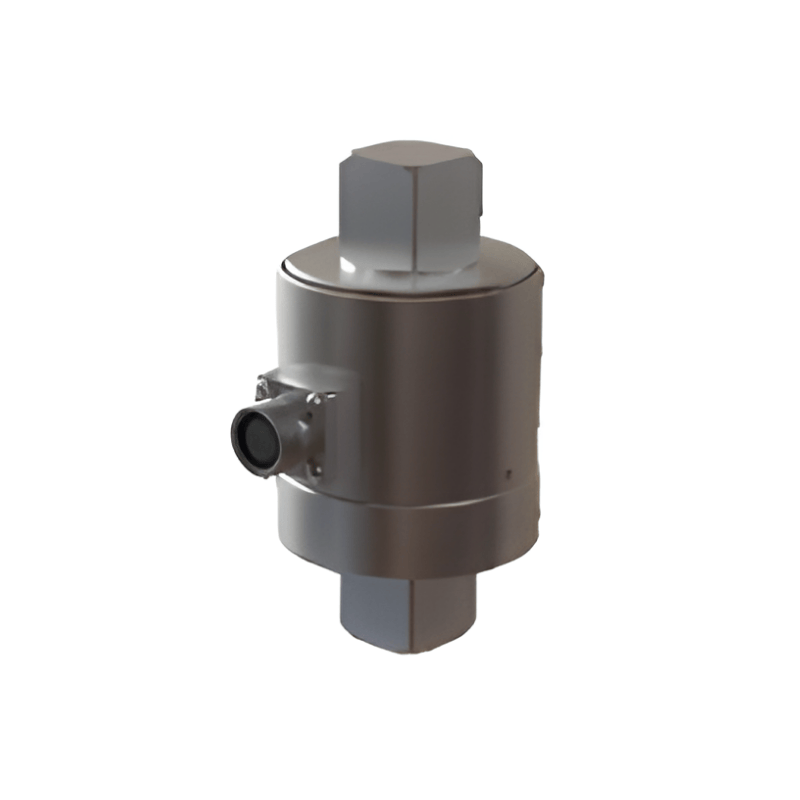
The Torque Sensor is a precision measurement device designed to accurately measure rotational force (torque) transmitted through a shaft or mechanical component. Torque is a critical parameter in evaluating the performance, efficiency, and mechanical integrity of rotating systems. Accurate torque measurement enables engineers to understand load conditions, validate designs, and monitor system behavior under real operating conditions.
Torque sensors convert mechanical torsion into an electrical signal that is proportional to the applied torque. Depending on the sensor design, this is commonly achieved using strain gauge technology, where tiny changes in resistance occur as the sensor body twists under load. These changes are processed into a stable and repeatable output signal suitable for real-time monitoring and data acquisition.
Measurement Principle
In a typical torque sensor, strain gauges are bonded to a specially designed elastic element. When torque is applied, the element experiences controlled deformation, causing the strain gauges to change resistance. This change is measured using a Wheatstone bridge configuration and converted into an electrical signal that accurately represents the applied torque.
Torque sensors can be designed for static and dynamic torque measurement, making them suitable for both steady-state testing and rapidly changing load conditions. Their fast response allows capture of transient events such as start-up torque, acceleration, and load fluctuations.
Key Characteristics
Torque sensors offer high accuracy, excellent linearity, and strong repeatability across the full measurement range. They are available in various torque capacities to support low-torque precision applications as well as high-torque industrial systems. Robust mechanical construction ensures stable performance under continuous rotation, vibration, and temperature variation.
Compact designs allow easy integration into test rigs, drivetrains, and rotating assemblies. Many torque sensors support combined measurement of torque and rotational speed, enabling direct calculation of mechanical power and efficiency.
Typical Applications
Torque sensors are widely used across multiple industries and testing scenarios, including:
Motor and Drive Testing: Measuring output torque, efficiency, and load behavior
Automotive & Transportation: Drivetrain testing, transmission evaluation, and component validation
Industrial Machinery: Monitoring torque in pumps, compressors, and production equipment
Aerospace & Defense: Actuator testing and mechanical system validation
Research & Education: Experimental studies involving rotational mechanics and power transmission
In these applications, precise torque data is essential for performance optimization, safety validation, and predictive maintenance.
Integration with Measurement Systems
Torque sensors are designed for seamless integration with Dynatronic data acquisition and monitoring systems. When synchronized with parameters such as speed, vibration, force, or temperature, torque data provides a comprehensive view of mechanical system behavior. This multi-parameter approach enables deeper analysis, root-cause identification, and more informed engineering decisions.
Reliable Torque Measurement for Critical Systems
By delivering accurate, stable, and repeatable torque measurements, torque sensors play a vital role in modern mechanical testing and monitoring environments. Their versatility, durability, and compatibility with advanced measurement systems make them an essential tool for engineers who require confidence in every torque value they measure.
 |
 |
|||
|---|---|---|---|---|
| Type Number | DT3F411 | DT3F412 | ||
| Range | 30N·m | 60N·m | 120N·m | 2 ~ 10000N·m |
| Zero Point Output | ±1%FS | ±1%FS | ±1%FS | ±1%FS |
| Nonlinear | ±0.5%FS | ±0.5%FS | ±0.5%FS | ±0.5%FS |
| Lag | ±0.5%FS | ±0.5%FS | ±0.5%FS | ±0.5%FS |
| Repetitiveness | ±0.5%FS | ±0.5%FS | ±0.5%FS | ±0.5%FS |
| Operating Temperature | -30°C ~ +70°C | -30°C ~ +70°C | -30°C ~ +70°C | -20°C ~ +60°C |