
3-Axis Force Sensor for Multi-Directional Force Measurement
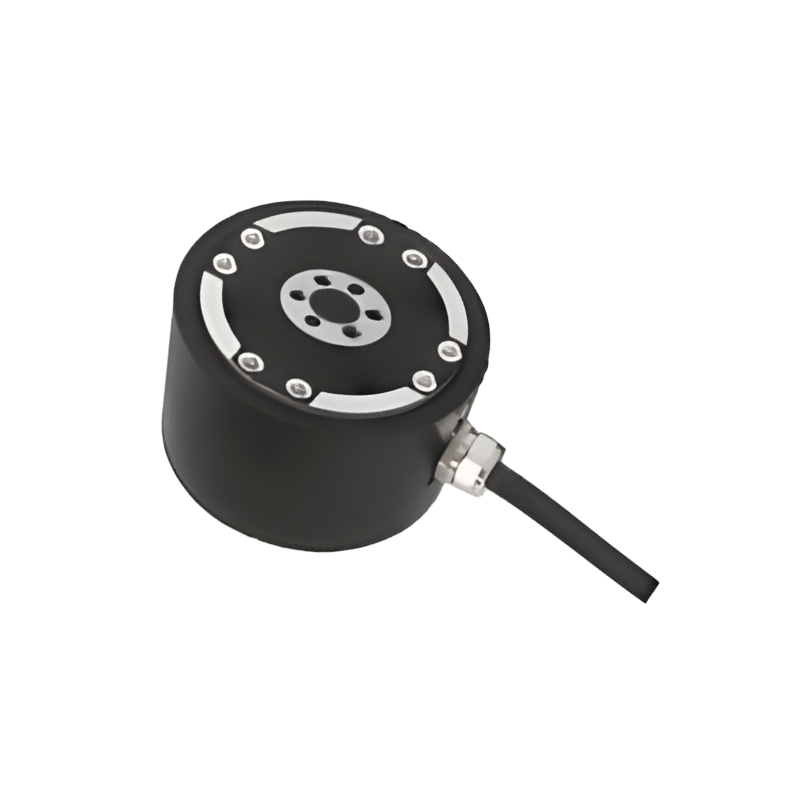
The 3-Axis Force Sensor is a precision measurement device designed to simultaneously measure forces along three orthogonal directions (Fx, Fy, and Fz). By capturing multi-directional force data at a single point, the sensor provides a complete picture of how loads are applied to a structure, component, or interface—something that cannot be achieved reliably with single-axis sensors alone.
Three-axis force measurement is increasingly important in modern engineering systems where loads are complex, off-axis, and dynamically changing. The 3-axis force sensor enables accurate analysis of real-world loading conditions while simplifying system design and reducing alignment errors.
What Is a 3-Axis Force Sensor?
A 3-axis force sensor measures force simultaneously in three perpendicular directions. This allows engineers to understand not only the magnitude of applied force, but also its direction and distribution. Because all three components are measured within the same sensing body, the data is inherently synchronized and spatially consistent—an important advantage for both testing and control applications.
Measurement Principle
Most 3-axis force sensors operate using strain gauge technology integrated into a carefully designed elastic structure. When external forces are applied, the structure deforms slightly in different directions. Strain gauges positioned at optimized locations detect these deformations and convert them into electrical signals.
Through calibration and signal decoupling algorithms, the sensor accurately resolves each force component independently while minimizing cross-axis interference. This ensures reliable measurement even when forces are applied simultaneously in multiple directions.
Key Characteristics
3-axis force sensors are designed to deliver high accuracy, good linearity, and strong repeatability across all measured axes. Their compact mechanical design allows easy integration into test fixtures, robotic end-effectors, tooling, and mechanical assemblies where space is limited.
The sensors are built to perform reliably in environments exposed to vibration, temperature variation, and continuous loading. Stable output and low hysteresis make them suitable for both static force measurement and dynamic force monitoring.
Typical Applications
3-axis force sensors are widely used in:
Industrial testing and validation, measuring complex load conditions
Robotics and automation, monitoring interaction forces and contact loads
Automotive and aerospace testing, analyzing multi-directional forces on components
Precision assembly and machining, controlling force in multiple directions
Research and laboratory environments, studying force distribution and mechanics
In these applications, understanding how forces act in three dimensions improves design accuracy, safety, and performance.
System Integration and Data Correlation
The 3-axis force sensor integrates seamlessly with Dynatronic data acquisition and control systems. When combined with displacement, vibration, speed, or temperature sensors, force data becomes part of a multi-parameter measurement framework. This correlation is particularly valuable for AI-driven diagnostics, digital twins, and advanced condition monitoring systems.
Why 3-Axis Force Measurement Matters
For modern engineering and AI-assisted analysis, understanding force direction is just as important as force magnitude. A 3-axis force sensor provides accurate, synchronized force data that supports deeper insight into system behavior, improved control strategies, and more reliable performance validation.
| Type Number | DT3F311 |
|---|---|
| Range |
Fx: 2500N Fy: 2500N Fz: 5000N |
| Zero Point Output | ±1%FS |
| Nonlinear | ±0.5%FS |
| Lag | ±0.5%FS |
| Repetitiveness | ±0.5%FS |
| Operating Temperature | -30°C ~ +70°C |