
Tension & Compression Sensors for Accurate Force Testing
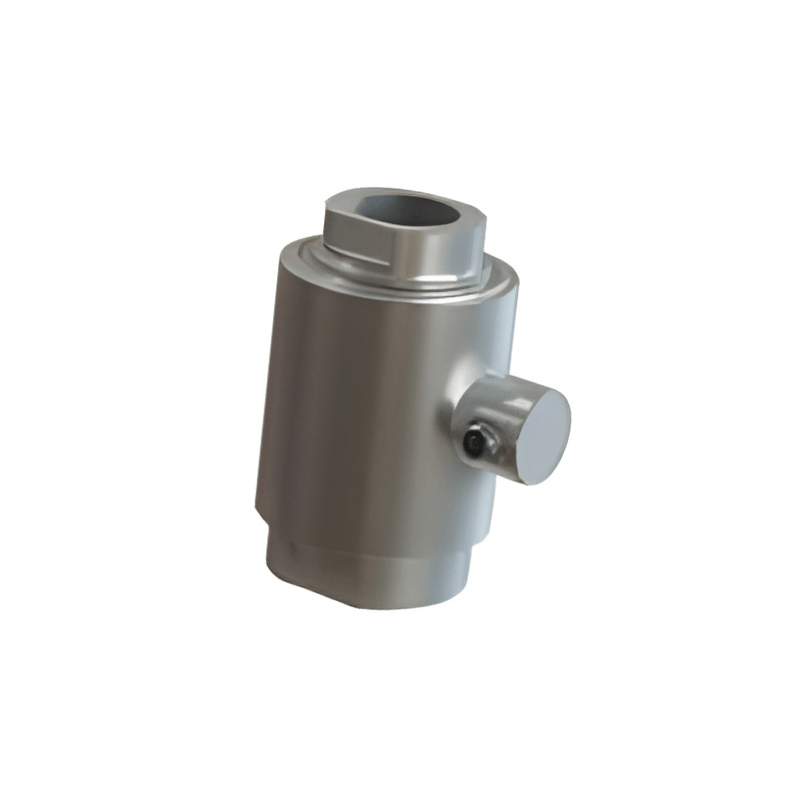
Tension & Compression Force Sensors are precision measurement devices designed to accurately measure forces acting in both pulling (tension) and pushing (compression) directions. These sensors are widely used in industrial testing, research laboratories, and production environments where reliable force measurement is critical for performance validation, quality control, and structural evaluation.
Built on proven sensing technologies such as strain gauge principles, tension and compression force sensors convert applied mechanical force into an electrical signal that is proportional to the load. This enables real-time force monitoring with high accuracy, repeatability, and long-term stability. By supporting bidirectional force measurement, a single sensor can be used across multiple test scenarios, reducing system complexity and improving measurement efficiency.
Measurement Principle and Design
Most tension and compression force sensors operate using bonded strain gauges arranged in a Wheatstone bridge configuration. When an external force is applied, the sensing element deforms slightly, causing a change in electrical resistance within the strain gauges. This change is converted into a precise electrical output that represents the magnitude and direction of the applied force.
The mechanical design of these sensors ensures uniform load distribution, minimizing measurement errors caused by off-axis forces or uneven loading. Robust housings and carefully engineered load paths allow the sensors to maintain accuracy even under repeated loading cycles, making them suitable for both static and dynamic force measurements.
Key Characteristics
Tension and compression force sensors offer high sensitivity, excellent linearity, and low hysteresis, ensuring accurate force readings across the full measurement range. They are available in multiple capacity ranges to support applications from low-force laboratory testing to high-load industrial measurements. Compact designs allow integration into test rigs, machines, and fixtures where space is limited, while durable construction supports operation in demanding environments.
Because of their stable output and predictable behavior, these sensors are well suited for closed-loop control, endurance testing, and long-term monitoring applications.
Typical Applications
Tension and compression force sensors are commonly used across a wide range of industries, including:
Material Testing: Measuring tensile strength, compressive strength, and mechanical limits of materials
Automotive & Transportation: Force measurement in component testing, braking systems, and structural validation
Manufacturing & Assembly: Monitoring press forces, joining processes, and quality control operations
Aerospace & Defense: Load testing of components, fixtures, and structural assemblies
Research & Education: Supporting experimental mechanics and force-related studies
System Integration
These sensors are designed for seamless integration with Dynatronic data acquisition and monitoring systems. When combined with high-resolution DAQ hardware and analysis software, they enable synchronized force measurement alongside other parameters such as displacement, vibration, or temperature. This integrated approach provides engineers with deeper insight into system behavior and test performance.
Reliable Force Measurement Where It Matters
By delivering accurate bidirectional force measurement in a robust and adaptable format, tension and compression force sensors play a critical role in modern testing and validation workflows. Their versatility, reliability, and compatibility with advanced measurement systems make them an essential tool for engineers who need confidence in every force measurement they record.
| Type Number | DTSF114 | |||||||||
|---|---|---|---|---|---|---|---|---|---|---|
| Range | 0.5kN | 1kN | 5kN | 10kN | 50kN | 100kN | 200kN | 300kN | 500kN | 1000kN |
| Zero Point Output | ±1%FS | ±1%FS | ±1%FS | ±1%FS | ±1%FS | ±1%FS | ±1%FS | ±1%FS | ±1%FS | ±1%FS |
| Nonlinear | ±0.05%FS | ±0.05%FS | ±0.05%FS | ±0.05%FS | ±0.05%FS | ±0.1%FS | ±0.1%FS | ±0.1%FS | ±0.1%FS | ±0.1%FS |
| Lag | ±0.05%FS | ±0.05%FS | ±0.05%FS | ±0.05%FS | ±0.05%FS | ±0.1%FS | ±0.1%FS | ±0.1%FS | ±0.1%FS | ±0.1%FS |
| Repetitiveness | ±0.05%FS | ±0.05%FS | ±0.05%FS | ±0.05%FS | ±0.05%FS | ±0.1%FS | ±0.1%FS | ±0.1%FS | ±0.1%FS | ±0.1%FS |
| Operating Temperature | -30°C ~ +70°C | -30°C ~ +70°C | -30°C ~ +70°C | -30°C ~ +70°C | -30°C ~ +70°C | -30°C ~ +70°C | -30°C ~ +70°C | -30°C ~ +70°C | -30°C ~ +70°C | -30°C ~ +70°C |