
Shear Beam Force Sensors for Industrial Load Measurement
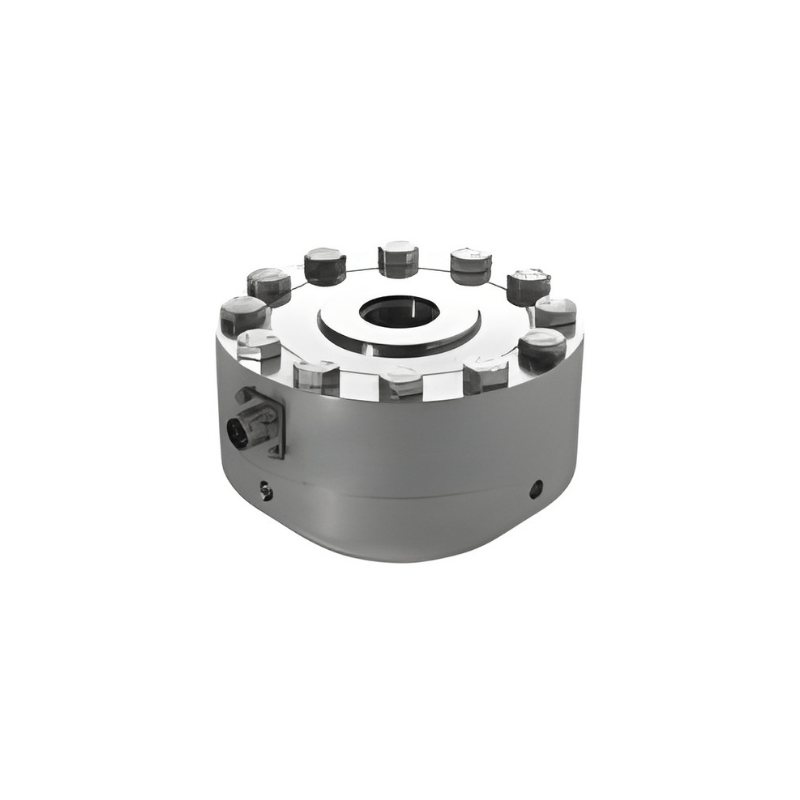
The Shear Beam Force Sensor is a highly reliable force measurement device designed for accurate measurement of static and quasi-static loads in industrial weighing, force monitoring, and structural measurement applications. Known for its excellent stability and robustness, the shear beam design is widely used where consistent accuracy and long-term reliability are essential.
Shear beam force sensors measure force by detecting shear deformation within a precisely engineered metal beam. Compared to bending-based force sensors, the shear beam structure offers improved resistance to off-axis loads, temperature effects, and mechanical disturbances. This makes it especially suitable for industrial environments where vibration, uneven loading, or continuous operation are common.
Measurement Principle
The sensor operates using strain gauge technology. Strain gauges are bonded to specific locations on the shear beam where shear stress is concentrated when force is applied. As the load increases, the beam experiences microscopic deformation, causing a proportional change in the electrical resistance of the strain gauges.
These resistance changes are measured through a Wheatstone bridge configuration and converted into a stable electrical output signal representing the applied force. Because the gauges are positioned to respond primarily to shear stress, the sensor delivers high accuracy with reduced sensitivity to bending moments or load eccentricity.
Key Characteristics
Shear beam force sensors are valued for their high accuracy, excellent repeatability, and low creep, even under long-term loading. The design provides good linearity across the rated capacity and strong resistance to temperature drift, ensuring reliable performance in varying environmental conditions.
The robust mechanical structure allows the sensor to withstand industrial loads and harsh operating environments. Compact form factors and standardized mounting interfaces simplify integration into machinery, platforms, and support structures.
Shear beam sensors are commonly available in a wide range of force capacities, making them suitable for both low-force measurement and higher-capacity industrial weighing applications.
Typical Applications
Shear beam force sensors are widely used in:
Industrial weighing systems, including platform scales and process weighing
Force monitoring, measuring loads in machinery, fixtures, and support structures
Manufacturing and automation, ensuring accurate load control and quality assurance
Material testing, supporting compression and load validation tests
Research and laboratory environments, where stable and repeatable force measurement is required
In many of these applications, the sensor’s resistance to load eccentricity and environmental effects is a key advantage.
System Integration
Shear beam force sensors integrate seamlessly with Dynatronic data acquisition, monitoring, and control systems. When combined with displacement, vibration, or temperature sensors, force data provides deeper insight into system behavior and load distribution. This multi-parameter measurement approach supports improved diagnostics, process optimization, and predictive maintenance strategies.
Stable Force Measurement for Industrial Use
By combining a proven shear beam design with precise strain gauge measurement, shear beam force sensors deliver dependable force data in demanding industrial applications. Their durability, accuracy, and ease of integration make them a trusted solution for engineers who require consistent and long-lasting force measurement performance.
| Type Number | ||||||||||
|---|---|---|---|---|---|---|---|---|---|---|
| Range | 5kN | 10kN | 20kN | 50kN | 100kN | 200kN | 300kN | 500kN | 1000kN | 2000kN |
| Zero Point Output | ±1%FS | ±1%FS | ±1%FS | ±1%FS | ±1%FS | ±1%FS | ±1%FS | ±1%FS | ±1%FS | ±1%FS |
| Nonlinear | ±0.1%FS | ±0.1%FS | ±0.1%FS | ±0.1%FS | ±0.1%FS | ±0.1%FS | ±0.1%FS | ±0.1%FS | ±0.1%FS | ±0.1%FS |
| Lag | ±0.1%FS | ±0.1%FS | ±0.1%FS | ±0.1%FS | ±0.1%FS | ±0.1%FS | ±0.1%FS | ±0.1%FS | ±0.1%FS | ±0.1%FS |
| Repetitiveness | ±0.1%FS | ±0.1%FS | ±0.1%FS | ±0.1%FS | ±0.1%FS | ±0.1%FS | ±0.1%FS | ±0.1%FS | ±0.1%FS | ±0.1%FS |
| Operating Temperature | -30℃~+70℃ | -30℃~+70℃ | -30℃~+70℃ | -30℃~+70℃ | -30℃~+70℃ | -30℃~+70℃ | -30℃~+70℃ | -30℃~+70℃ | -30℃~+70℃ | -30℃~+70℃ |