
Shock Sensors for High-G Impact and Shock Measurement
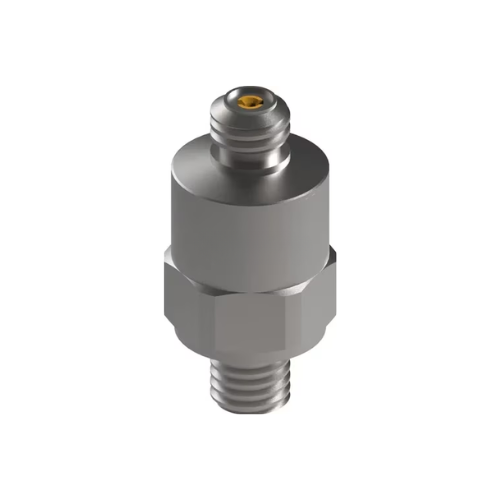
Shock Sensors are specialized measurement devices designed to capture high-magnitude, short-duration acceleration events, commonly referred to as mechanical shock. These events occur during impacts, drops, collisions, explosions, or sudden changes in motion, where acceleration levels can reach hundreds or thousands of g within milliseconds or microseconds.
Unlike standard vibration sensors, which are optimized for continuous or periodic motion, shock sensors are engineered to survive and accurately measure extreme acceleration peaks without signal saturation or mechanical damage. They are essential in applications where understanding peak loads, impact severity, and transient response is critical to safety, reliability, and design validation.
What Is Shock Measurement?
Shock measurement focuses on capturing transient acceleration events with very fast rise times and short durations. Typical shock events include:
Drop and impact tests
Pyrotechnic or explosive shock
Transportation and handling impacts
Mechanical collision or sudden stop events
Because these events happen extremely quickly, shock sensors must offer very high bandwidth, high overload resistance, and fast response time to faithfully reproduce the acceleration time history.
Measurement Principle
Most shock sensors operate using piezoelectric sensing technology. When subjected to rapid acceleration, the piezoelectric element generates an electrical charge proportional to the applied shock. This sensing principle is ideal for shock measurement due to its inherent stiffness, fast response, and ability to withstand very high g-levels.
Some shock sensors are specifically designed with mechanical filtering or damping to tailor the frequency response and avoid resonance during extreme impacts, ensuring accurate peak measurement.
Key Characteristics
Shock sensors are defined by several critical performance attributes:
High g-range capability, supporting extreme acceleration levels
Wide frequency response, capturing fast transient events accurately
Short rise-time response, essential for shock pulse fidelity
Rugged construction, surviving repeated high-energy impacts
Their compact and robust design allows mounting directly on test articles, fixtures, or structures without compromising measurement integrity.
Typical Applications
Shock sensors are widely used in:
Shock and drop testing, validating product durability and packaging design
Aerospace and defense, measuring pyrotechnic and mechanical shock
Automotive testing, evaluating crash-related and impact events
Electronics and consumer products, assessing damage risk during handling
Military and industrial research, studying shock propagation and response
In these applications, accurate shock data is essential for predicting failure, improving design robustness, and meeting regulatory or qualification standards.
System Integration and Data Correlation
Shock sensors integrate seamlessly with Dynatronic high-speed data acquisition systems. When synchronized with strain gauges, displacement sensors, or pressure sensors, shock data becomes part of a multi-parameter event analysis.
This correlation is especially valuable for AI-driven failure analysis, digital twins, and predictive modeling, where accurate peak and time-history data improve model reliability and decision-making.
Why Shock Sensors Matter
Mechanical shock is one of the most destructive loads a system can experience. By accurately capturing shock acceleration, engineers can:
Identify peak loads and failure thresholds
Validate protective designs and packaging
Improve safety and reliability
Support AI-based diagnostics and design optimization
Shock sensors provide the critical data needed to understand and mitigate extreme transient events.
 |
 |
 |
|
|---|---|---|---|
| Type Number | DA6001 | DA6002 | DA6003 |
| Description | High g shock, charge output | High g shock, charge output | High g shock, charge output |
| Sensitivity | 2 pC/g | 0.98 pC/g | 0.15 pC/g |
| Weight | 6 g | 13 g | 4 g |
| Shock Limit | 20,000 g | 50,000 g | 100,000 g |
| Frequency Response (± 10%) | 1 - 9,000 Hz | 1 - 10,000 Hz | 1 - 10,000 Hz |
| Temperature Range | -55 - 100 ℃ | -55 - 175 ℃ | -55 - 100 ℃ |
| Connector | 10-32 Coaxial connector | 10-32 Coaxial connector | 10-32 Coaxial connector |
| Signal/ground isolation | No | No | No |
| Hermetic seal | No | No | Yes |
| Mounting Method | Stud | Stud | Stud |
| Dimension | 11×11×21.6 mm | 14.3×14.3×16.8 mm | 12×12×10 mm |