
Piezoelectric Microphone for Industrial Acoustic Testing
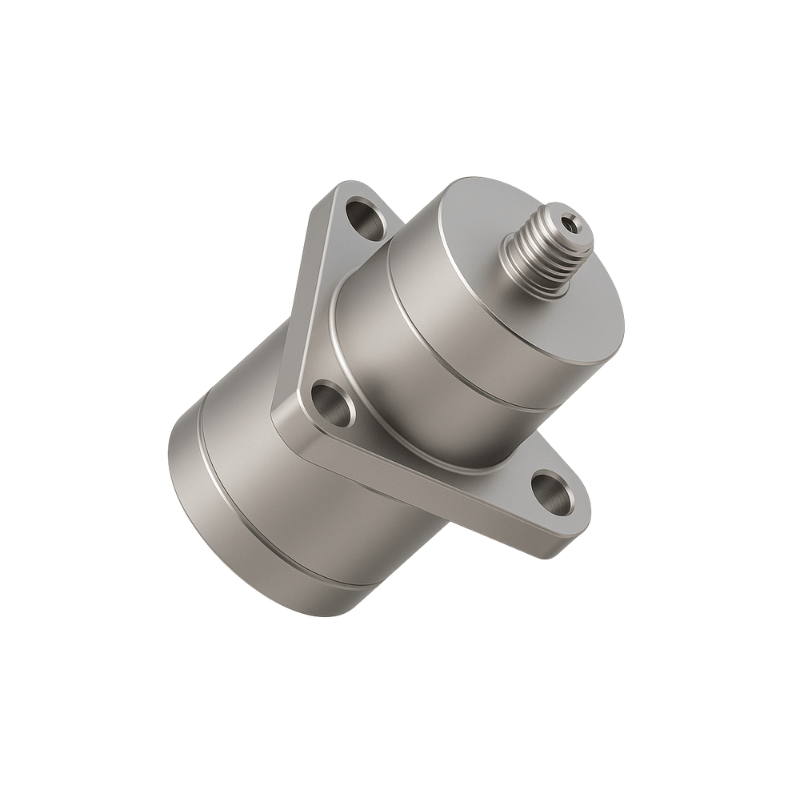
The Piezoelectric Microphone is a compact and highly sensitive acoustic sensor designed for precise sound pressure and vibration-related noise measurement in industrial, laboratory, and research environments. Based on proven piezoelectric technology, this microphone converts acoustic pressure and mechanical vibrations into stable electrical signals, making it ideal for applications where conventional microphones struggle due to harsh conditions, space limitations, or high noise levels.
Unlike traditional condenser microphones that rely on external power and delicate diaphragms, piezoelectric microphones use the piezoelectric effect, where mechanical stress applied to a piezoelectric material generates an electrical charge. This operating principle allows the sensor to respond quickly and reliably to dynamic pressure changes, vibrations, and acoustic events, even in demanding environments. As a result, piezoelectric microphones are especially well suited for industrial testing, machinery diagnostics, and experimental measurements where robustness and repeatability are essential.
Key Characteristics
The piezoelectric microphone offers a wide dynamic range and fast response, enabling accurate detection of both low-level acoustic signals and high-intensity noise events. Its compact form factor allows installation in confined or integrated test setups, while the rugged construction ensures stable performance under vibration, temperature variation, and mechanical stress. Because the sensor is inherently resistant to electromagnetic interference, it delivers clean and reliable signals even in electrically noisy environments such as test labs, production lines, and power systems.
How It Works
When sound waves or pressure fluctuations reach the piezoelectric element, they create microscopic mechanical deformation within the material. This deformation produces a proportional electrical signal that reflects the amplitude and frequency of the incoming acoustic energy. The signal can then be captured by data acquisition systems for further analysis, including sound pressure level measurement, frequency analysis, and event detection.
By responding directly to mechanical energy, piezoelectric microphones are particularly effective for structure-borne noise, impact sound detection, and vibration-induced acoustic measurements—areas where air-coupled microphones may be less reliable.
Typical Applications
Piezoelectric microphones are widely used across multiple industries and test scenarios, including:
Industrial Noise Monitoring: Measuring acoustic emissions from motors, gearboxes, pumps, and rotating machinery
Vibration & Acoustic Correlation: Linking vibration behavior with sound generation in mechanical systems
Product Testing & R&D: Capturing acoustic signatures during durability, fatigue, or performance testing
Automotive & Transportation: Detecting abnormal noise, squeal, or resonance in components and assemblies
Education & Research: Supporting experimental acoustics and vibration studies in laboratories
Designed for Measurement Systems
The piezoelectric microphone is fully compatible with Dynatronic data acquisition and monitoring systems, allowing seamless integration into multi-channel measurement setups. This makes it a practical choice for engineers seeking a reliable acoustic sensor that complements vibration, strain, and other physical measurements within a unified testing environment.
By combining durability, sensitivity, and simplicity, the piezoelectric microphone delivers dependable acoustic data where precision matters most—without unnecessary complexity.
 |
|
|---|---|
| Type Number | DZS1201 |
| Description | High temperature, High intensity acoustic measurement |
| Sensitivity mV/Pa±dB@250Hz | 0.16 |
| Working temperature | -55 ~ +260 ℃ |
| Dynamic Range | 100 ~ 180 dB |
| Dimension | 20.1 mm |