
Dynamic Force Sensors for High-Speed Load Measurement
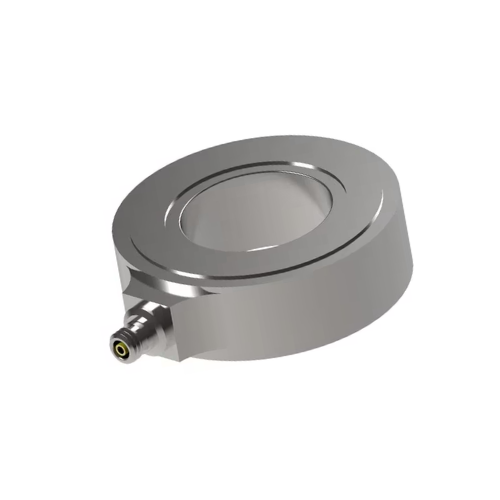
Dynamic Force Sensors are high-performance measurement devices designed to accurately capture time-varying forces that change rapidly during operation. Unlike static force sensors, which are optimized for steady or slowly changing loads, dynamic force sensors are engineered to measure transient, oscillating, and impact forces with high fidelity. These sensors play a critical role in applications where force behavior over time is essential for understanding system performance, durability, and safety.
Dynamic force measurement is particularly important in modern engineering environments, where products and structures are increasingly subjected to vibration, shock, cyclic loading, and high-speed operation. Dynamic force sensors convert rapidly changing mechanical loads into precise electrical signals, allowing engineers to observe force peaks, frequency content, and load histories that would otherwise remain hidden.
Measurement Principle
Dynamic force sensors typically operate using piezoelectric sensing technology. When a dynamic force is applied, the piezoelectric element inside the sensor generates an electrical charge proportional to the applied force. This technology is highly suited for dynamic applications because of its fast response time, wide frequency bandwidth, and ability to withstand high overloads.
Because piezoelectric sensors respond only to changes in force, they are ideal for capturing dynamic events such as impacts, vibration-induced loads, and cyclic forces. The generated charge signal is usually processed through a charge amplifier and then recorded by a high-speed data acquisition system for analysis.
Key Characteristics
Dynamic force sensors offer excellent frequency response, high stiffness, and minimal deformation under load. This ensures that the sensor does not significantly influence the force being measured, which is critical for accurate results. They are capable of capturing very fast force transients, making them suitable for high-speed and high-energy test environments.
Robust mechanical construction allows reliable operation under harsh conditions, including vibration, temperature variation, and repeated shock loading. Their stable sensitivity and repeatable output make them suitable for both short-duration tests and extended dynamic monitoring.
Typical Applications
Dynamic force sensors are widely used across industries and test scenarios, including:
Impact and Shock Testing: Measuring force during drop tests, collision events, and mechanical impacts
Vibration and Fatigue Testing: Monitoring cyclic forces applied to components and structures
Automotive & Transportation: Suspension testing, drivetrain force analysis, and crash-related measurements
Aerospace & Defense: Dynamic load measurement during structural qualification and component testing
Industrial Machinery: Measuring fluctuating forces in presses, tooling, and rotating equipment
Research & Education: Experimental studies involving dynamic mechanical behavior
In these applications, understanding how force varies over time is critical for validating designs, predicting fatigue life, and improving reliability.
Integration with Measurement Systems
Dynamic force sensors are designed for seamless integration with Dynatronic data acquisition and vibration measurement systems. When synchronized with parameters such as acceleration, displacement, strain, or velocity, force data provides a deeper understanding of system dynamics. This multi-parameter approach enables engineers to correlate force behavior with motion and structural response for comprehensive analysis.
Accurate Force Insight Under Dynamic Conditions
By delivering precise, high-speed force measurements, dynamic force sensors enable engineers to capture real-world loading conditions that static sensors cannot measure effectively. Their ability to withstand extreme forces while maintaining accuracy makes them an essential tool for dynamic testing, validation, and advanced mechanical analysis.
 |
 |
|
|---|---|---|
| Type Number | DL1702 | DL1703 |
| Sensitivity (±15%) | 4047 pC/kN | 4047 pC/kN |
| Pressure Measuring Range | ≤ 15 kN | ≤15 kN |
| Tension Measuring Range | ≤ 2 kN | NA |
| Max. Static Force | 22.5 kN | 22.5 kN |
| Frequency Response (± 3dB) | 36 kHz | 90 kHz |
| Non-linearity | ≤ 1% | ≤ 1% |
| Temperature Range | -55 ~ 125 ℃ | -55 ~ 125 ℃ |
| Capacitance | 14 pF | 12 pF |
| Insulation Resistance | ≥ 10¹² | ≥ 10¹² |
| Dimension | 15.88×15.88×12.7 mm | 16.5×7.88×6×12.7 mm |
| Hole Diameter | NA | 6.37 mm |
| Weight | 20.69 g | 9.56 g |
| Material | SS | SS |
| Hermetic Seal | Yes | Yes |
| Connector | 10-32 Coaxial connector | 10-32 Coaxial connector |
| Connector Location | Unilateral | Unilateral |