
High-Cost AHRS Sensors for Motion and Orientation
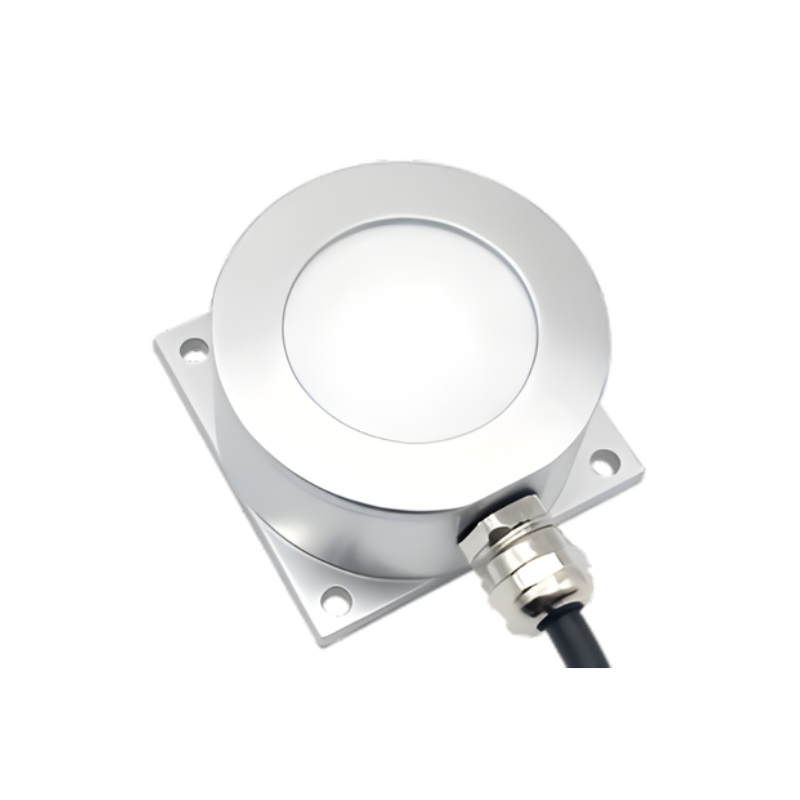
The High Cost-Effective AHRS (Attitude and Heading Reference System) is a compact inertial sensing solution designed to provide accurate orientation, attitude, and heading information while maintaining an excellent balance between performance and cost. By integrating multiple inertial and magnetic sensors into a single module, this AHRS delivers reliable motion and orientation data for a wide range of industrial, research, and mobile applications.
An AHRS typically combines gyroscopes, accelerometers, and magnetometers to estimate roll, pitch, and yaw in real time. Through sensor fusion algorithms, raw data from each sensing element is processed and compensated to provide stable and drift-controlled orientation outputs. This makes AHRS technology essential in systems where spatial awareness, motion tracking, or navigation feedback is required.
Measurement Principle and Architecture
The system continuously measures angular rate, linear acceleration, and the Earth’s magnetic field. Gyroscopes capture rotational motion, accelerometers sense gravity and dynamic acceleration, and magnetometers provide heading reference relative to magnetic north. Advanced sensor fusion algorithms combine these inputs to reduce noise, compensate for drift, and maintain reliable orientation estimates even during dynamic movement.
This high cost-effective AHRS is engineered to deliver dependable performance without unnecessary complexity, making it suitable for applications that require accurate orientation data but do not need the expense of high-end navigation-grade systems.
Key Characteristics
The AHRS offers fast response, stable output, and good resistance to vibration and environmental variation. Its compact and lightweight design allows easy integration into space-constrained systems, while low power consumption supports continuous operation in both fixed and mobile platforms.
Because the system provides real-time attitude and heading information, it can be used for monitoring, control, and data analysis applications. The predictable and repeatable output also makes it suitable for experimental setups and validation testing.
Typical Applications
High cost-effective AHRS units are widely used in:
Industrial Motion Monitoring: Tracking orientation and movement of equipment or structures
Robotics & Automation: Providing attitude feedback for mobile or articulated systems
Automotive & Transportation: Measuring vehicle dynamics, tilt, and heading
Aerospace & UAV Testing: Supporting flight control testing and motion analysis
Education & Research: Teaching inertial navigation principles and conducting motion experiments
In many of these applications, AHRS data is combined with other measurements to build a complete picture of system behavior.
Integration with Measurement Systems
The AHRS is designed for seamless integration with Dynatronic data acquisition and monitoring systems. When synchronized with parameters such as vibration, force, strain, or temperature, orientation data provides additional context that enhances analysis and decision-making. This multi-parameter approach is especially valuable in dynamic testing and system validation environments.
Practical Orientation Data at Lower Cost
By offering reliable attitude and heading information in a compact and cost-effective format, this AHRS solution enables engineers to implement orientation sensing without over-engineering their systems. It delivers practical, dependable motion insight for applications where accuracy, stability, and affordability must coexist.
| Type Number | DTBW-AH200 | |
|---|---|---|
| Attitude Parameters | Roll and Pitch Accuracy | 0.5° |
| Heading Accuracy | 0.8° | |
| Heading Range | Pitch ± 90°, Roll ± 180° | |
| Gyroscope | Resolution | 0.01°/sec |
| Range | ±400°/sec | |
| Full temperature zero bias | 20°/h (10s, 1σ) | |
| Angle random walk coefficient | < 0.1°/√h | |
| Scale factor nonlinearity | ≤100ppm (1σ) | |
| Scale factor repeatability | ≤100ppm (1σ) | |
| Bandwidth | 200Hz | |
| Accelerometer | Range: X, Y, Z | ±3.6 g |
| Zero bias stability |
0.001mg (25°C, 100s, 1σ) 0.01mg (25°C, 10s, 1σ) |
|