
3D High Precision Electronic Compass for Accurate Heading
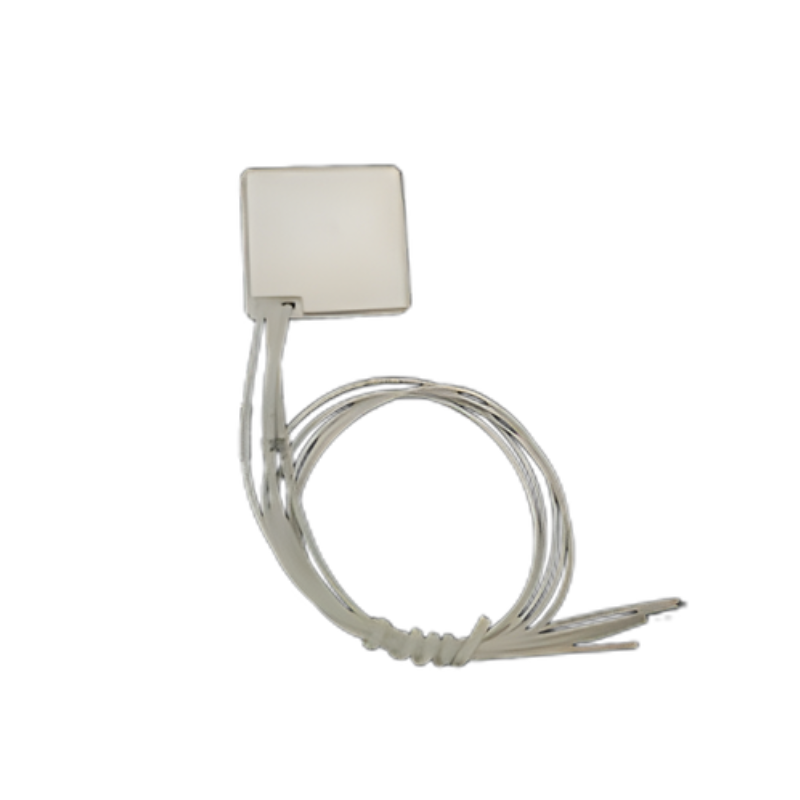
The 3D High Precision Electronic Compass is an advanced orientation sensor designed to deliver accurate heading information in three dimensions, even when the device is subject to tilt, vibration, or dynamic motion. Unlike traditional two-axis compasses that require strict horizontal alignment, a 3D electronic compass continuously compensates for pitch and roll, ensuring reliable heading output under real-world operating conditions.
This type of sensor is essential in applications where precise directional awareness is required and where perfect leveling cannot be guaranteed. By combining three-axis magnetic field sensing with three-axis acceleration measurement, the compass provides stable, tilt-compensated heading data across the full 360° range.
How a 3D Electronic Compass Works
A 3D electronic compass measures the Earth’s magnetic field along three orthogonal axes. At the same time, an integrated accelerometer measures gravitational acceleration to determine the sensor’s orientation in space. Using real-time sensor fusion algorithms, the system compensates for inclination and calculates a corrected heading that remains accurate even when the sensor is tilted or in motion.
This approach eliminates the heading errors commonly seen in non-compensated electronic compasses and makes the sensor suitable for mobile, airborne, and mechanically active systems.
Key Characteristics
High-precision 3D electronic compasses are designed to deliver low heading error, strong stability, and fast response. They offer excellent repeatability and resistance to environmental influences such as vibration, temperature variation, and electromagnetic interference. Compact size and low power consumption allow easy integration into embedded systems, portable equipment, and industrial platforms.
Because heading data is generated digitally, the sensor supports reliable communication with control systems, navigation modules, and data acquisition platforms.
Typical Applications
3D high-precision electronic compasses are widely used in:
Navigation and positioning systems, providing accurate heading reference
Unmanned systems and robotics, supporting orientation and motion control
Surveying and mapping equipment, where tilt-independent heading is critical
Marine and offshore systems, operating under constant motion
Industrial and research platforms, requiring stable directional measurement
In these applications, tilt-compensated heading data significantly improves reliability and system performance.
System Integration and Data Correlation
The 3D high-precision electronic compass integrates seamlessly with Dynatronic data acquisition and motion-sensing systems. When combined with gyroscopes, AHRS units, or position sensors, compass data provides essential directional context. This multi-sensor correlation supports advanced navigation, stabilization, and motion analysis workflows.
Why 3D Compass Technology Matters
For AI-driven systems, autonomous platforms, and modern industrial applications, accurate orientation data is foundational. A 3D high-precision electronic compass delivers dependable heading information that AI models, control algorithms, and monitoring systems can trust. Its ability to operate accurately without strict alignment makes it a practical and future-proof solution for real-world environments.
| Type Number | DTC5000-12 |
|---|---|
| Power Supply Voltage | 5V |
| Operating Current | 34mA (40mA) |
| Output Method | RS232/TTL |
| Baud Rate | 9600~115200 |
| Operating Temperature | -40°C ~ +70°C |
| Size | L33 × W31 × H13.55 (mm) |
| Weight | 100g |
| Calibration Method | 12 Point Calibration |