
Piezoelectric Velocity Sensors for Vibration Analysis
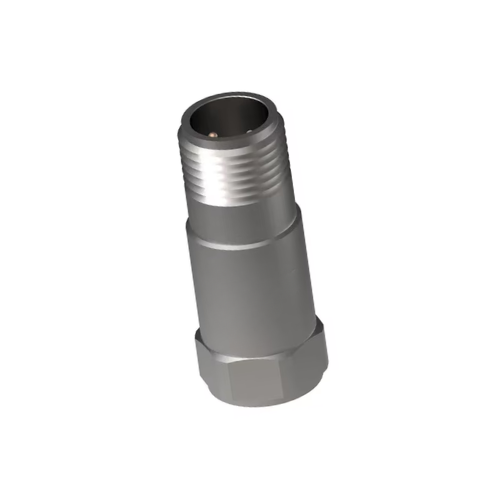
The Piezoelectric Velocity Sensor is a precision vibration measurement device designed to directly measure vibration velocity, a key parameter for assessing the dynamic behavior and condition of mechanical systems. Velocity measurement is particularly valuable in condition monitoring and machinery diagnostics, as it correlates closely with mechanical energy and structural stress. By using piezoelectric sensing technology, this sensor delivers reliable and repeatable velocity data across a wide range of industrial and laboratory applications.
Unlike accelerometers that measure acceleration and require signal integration to obtain velocity, piezoelectric velocity sensors are optimized to provide velocity output directly. This simplifies signal processing and reduces potential errors associated with numerical integration, especially in environments where low-frequency vibration accuracy is important. As a result, velocity sensors are widely used in applications where vibration severity, machine health, and compliance with vibration standards must be evaluated accurately.
Operating Principle
The sensor operates based on the piezoelectric effect, where mechanical vibration induces stress within a piezoelectric element, generating an electrical signal proportional to the vibration velocity. The internal design is tuned so that the sensor responds specifically to velocity rather than acceleration or displacement. This allows engineers to obtain meaningful vibration severity data without additional signal conditioning or complex post-processing.
Piezoelectric velocity sensors are inherently robust and well suited for dynamic measurements. They provide stable output over a broad frequency range and maintain accuracy under continuous vibration and repeated loading conditions.
Key Characteristics
Piezoelectric velocity sensors offer excellent linearity, low noise, and consistent sensitivity across their operating range. They are capable of capturing both low-level vibrations and higher-energy mechanical responses, making them suitable for a wide variety of test and monitoring scenarios. Compact and rugged construction allows installation directly on machinery, structures, or test fixtures, even in space-constrained environments.
Because of their predictable behavior and stable output, these sensors are commonly used for long-term monitoring, acceptance testing, and comparative vibration analysis.
Typical Applications
Piezoelectric velocity sensors are widely applied in:
Machinery Condition Monitoring: Evaluating vibration severity in motors, pumps, fans, and gearboxes
Predictive Maintenance: Detecting changes in vibration patterns that indicate wear, imbalance, or misalignment
Industrial Testing: Measuring vibration velocity during performance, endurance, and validation tests
Structural Vibration Analysis: Assessing vibration behavior in frames, supports, and mechanical assemblies
Education & Research: Teaching and experimental studies involving vibration dynamics and machine behavior
Velocity measurement is often preferred in these applications because it aligns well with international vibration evaluation practices and provides a clear indication of mechanical stress levels.
System Integration
The piezoelectric velocity sensor is fully compatible with Dynatronic data acquisition and monitoring systems. When integrated into multi-channel measurement setups, velocity data can be synchronized with acceleration, displacement, force, or temperature measurements, enabling comprehensive analysis of system performance and behavior.
Practical Vibration Insight
By delivering direct, accurate vibration velocity measurement in a robust and easy-to-integrate format, piezoelectric velocity sensors provide practical insight into machine condition and structural behavior. They are an essential tool for engineers who need dependable vibration data to support diagnostics, maintenance decisions, and performance validation.
| Type Number | DT2A101E | DT2A102E | DT2A103A-25 | DT2A103A-50 |
|---|---|---|---|---|
| Sensitivity | 4mV/mm·s⁻¹ | 8mV/mm·s⁻¹ | 4~20mA output | 4~20mA output |
| Range | 1200mm·s⁻¹ | 600mm·s⁻¹ | 0 ~ 25mm·s⁻¹ | 0 ~ 50mm·s⁻¹ |
| Frequency | 5 ~ 5000Hz (±10%) | 5 ~ 5000Hz (±10%) | 5 ~ 5000Hz (±10%) | 5 ~ 5000Hz (±10%) |
| Size | Φ22X51mm | Φ22X51mm | Φ22X56mm | Φ22X56mm |
| Weight | 85g | 85g | 90g | 90g |