
Fiber Optic Strain Sensors for EMI-Free Measurement
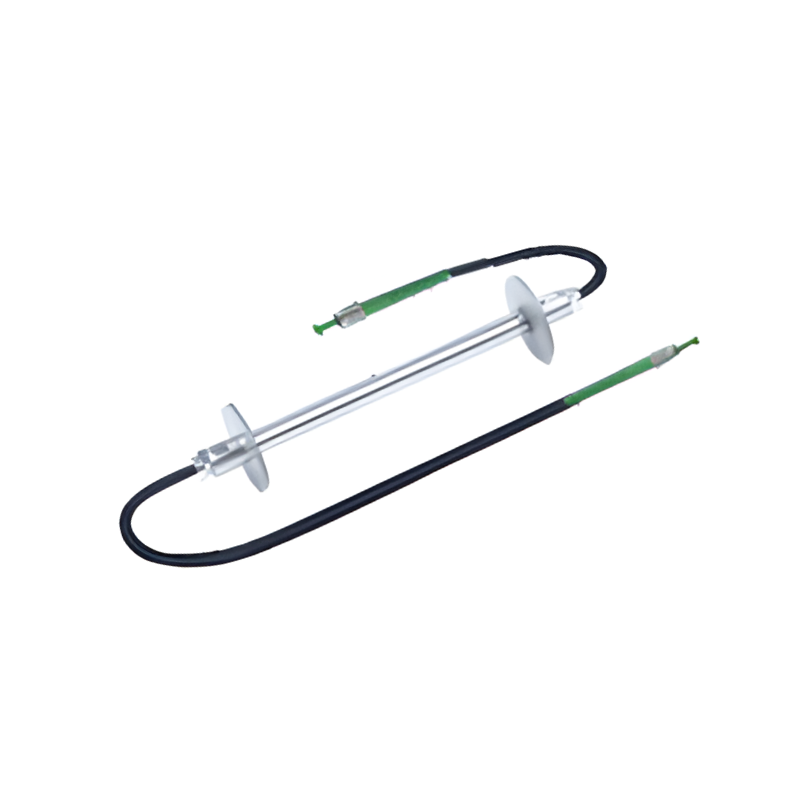
The Fiber Optic Strain Sensor is a high-precision strain measurement solution designed for applications where electrical strain gauges are limited by electromagnetic interference, long cable runs, or harsh environments. By using optical measurement principles instead of electrical resistance, this sensor delivers stable, accurate strain data while providing complete electrical isolation at the sensing point.
Fiber optic strain sensing is particularly valuable in environments with strong electromagnetic fields, high voltage, corrosive conditions, or long-distance signal transmission requirements. Because strain information is transmitted as light through an optical fiber, the measurement is immune to EMI, RFI, and ground loop effects that commonly degrade traditional strain gauge signals.
What Is a Fiber Optic Strain Sensor?
A fiber optic strain sensor measures mechanical deformation by detecting changes in the optical properties of a fiber when strain is applied. As the structure under test deforms, the fiber experiences microscopic elongation or compression, which produces a measurable optical change. This change is processed by an optical interrogator to calculate strain with high resolution and repeatability.
Unlike conventional strain gauges, fiber optic strain sensors do not require electrical excitation at the sensing point, making them inherently safe for use in high-voltage or explosive environments.
Measurement Principle
Fiber optic strain sensors typically operate using optical techniques such as wavelength shift, interferometry, or intensity modulation. When strain is applied, it alters the optical path or reflected wavelength within the fiber. The magnitude of this change is directly proportional to the applied strain.
Because optical signals can travel long distances without degradation, fiber optic strain sensors are ideal for distributed measurement, remote monitoring, and large-scale structures.
Key Characteristics
Fiber optic strain sensors offer high accuracy, excellent long-term stability, and strong resistance to environmental influences. They are lightweight, compact, and can be bonded or embedded into structures without significantly altering mechanical behavior.
Their immunity to electromagnetic noise makes them suitable for operation near power equipment, electric motors, RF sources, and high-current systems. In addition, optical fibers are resistant to corrosion and can operate in chemically aggressive environments.
Typical Applications
Fiber optic strain sensors are widely used in:
Structural health monitoring, measuring strain in bridges, buildings, and civil infrastructure
Aerospace and defense, monitoring strain in airframes, composite structures, and test articles
Energy and power systems, including high-voltage equipment and wind turbine structures
Industrial testing and R&D, where EMI-free strain measurement is required
Marine and offshore engineering, supporting long-term monitoring in harsh environments
In these applications, reliable strain data is essential for safety assessment, fatigue analysis, and lifecycle management.
System Integration and Data Correlation
Fiber optic strain sensors integrate seamlessly with Dynatronic optical interrogators and data acquisition systems. When synchronized with temperature, vibration, displacement, or pressure measurements, strain data becomes part of a multi-parameter structural analysis framework. This approach is increasingly important for AI-driven monitoring, digital twins, and predictive maintenance systems.
Why Fiber Optic Strain Measurement Matters
As engineering systems become larger, more complex, and more electrified, traditional electrical strain measurement faces growing limitations. Fiber optic strain sensors provide noise-free, stable, and scalable strain measurement, making them a future-ready solution for modern monitoring and testing applications.
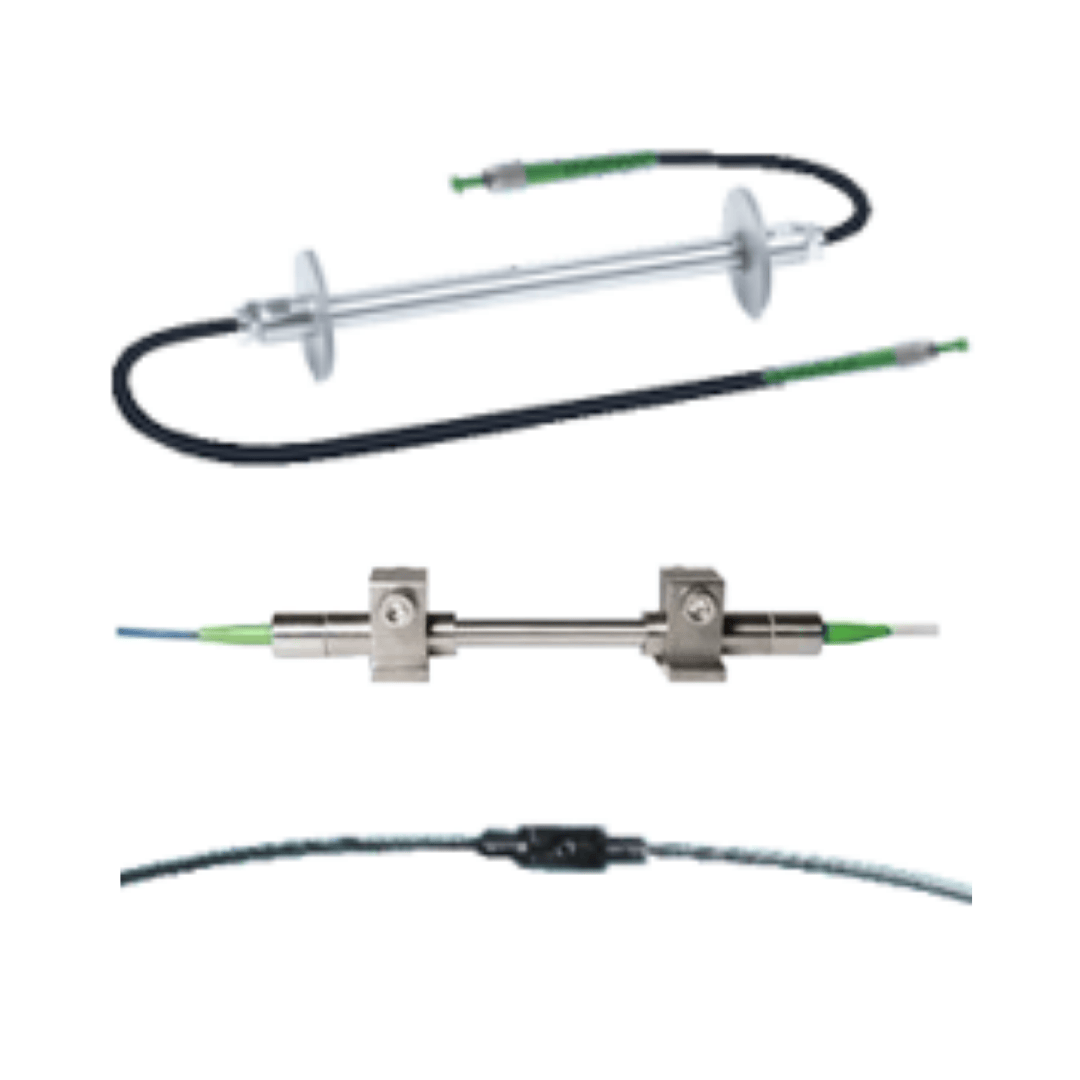
| Type Number | DT6G001 (Buried Type) | DT6G002 (Adhesive Type) | DT6G003 (Welding Type) |
|---|---|---|---|
| Strain Measurement Range | ±1800με | ±5000με | ±2500με |
| Selection range of Central Wavelength | 1525 ~ 1565nm | 1525 ~ 1565nm | 1525 ~ 1565nm |
| Sensitivity | 1.2pm/με | 1.2pm/με | 1.2pm/με |
| Precision | 1%F.S | 1%F.S | 1%F.S |
| Gauge Length | Customizable | 5mm | 16 ~ 23mm |
| Reflectance | > 70% | > 70% | > 70% |
| Temperature Compensation | Yes | No | No |
| Fiber Type | Single-Mode Fiber | Single-Mode Fiber | Single-Mode Fiber |
| Fiber Optic Interface | FC/APC | FC/APC | FC/APC |
| Tail Fiber Type | Armored protection | No armor protection | No armor protection |
| Operating Temperature | - 40 ~ 70℃ | - 40 ~ 70℃ | - 40 ~ 70℃ |
| Size | Φ16X320mm (Customizable) | 16X5X11mm | 33X8X11mm |
| Mounting Base | Optional flange (embedded), fixed seat, expansion bolt | No | No |