
Exhaust Temperature Sensors for High-Temperature Measurement
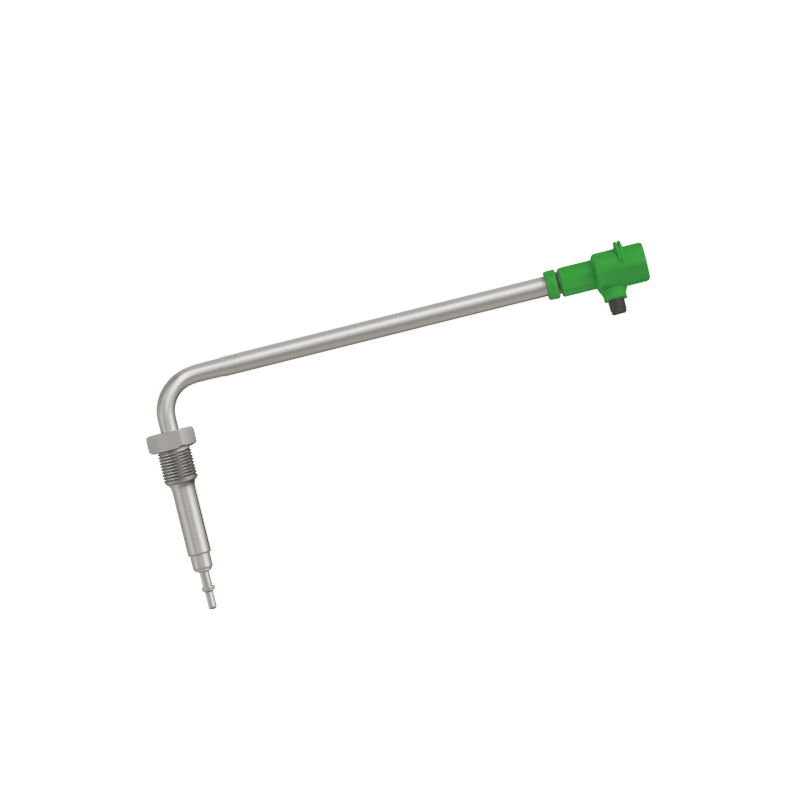
The Exhaust Temperature Sensor is a high-temperature measurement device designed to accurately monitor exhaust gas temperature (EGT) in engines, turbines, and high-temperature industrial systems. Exhaust temperature is a critical parameter for evaluating combustion efficiency, thermal loading, and overall system performance. Reliable EGT measurement helps engineers optimize designs, improve efficiency, and protect components from thermal damage.
Exhaust temperature sensors are engineered to operate in extreme thermal environments, where temperatures can rise rapidly and fluctuate under varying load conditions. By converting thermal energy into a stable electrical signal, the sensor provides real-time temperature data that can be used for monitoring, control, diagnostics, and post-test analysis.
Measurement Principle
Most exhaust temperature sensors operate using thermoelectric or resistance-based temperature sensing principles. When exposed to heat, the sensing element produces a predictable electrical response proportional to temperature. This allows accurate tracking of both steady-state exhaust temperatures and rapid thermal changes during start-up, acceleration, or load variation.
Because exhaust systems are subject to vibration, pressure pulsation, and high gas velocities, the sensor design prioritizes mechanical robustness and thermal stability. This ensures consistent performance even during prolonged exposure to harsh operating conditions.
Key Characteristics
Exhaust temperature sensors offer a wide operating temperature range, fast response time, and strong resistance to thermal shock. Their durable construction allows reliable operation in environments with high vibration, aggressive exhaust gases, and continuous thermal cycling.
Compact probe designs enable installation directly into exhaust manifolds, ducts, or test chambers without significantly disturbing gas flow. The predictable and repeatable output makes these sensors suitable for both closed-loop control systems and high-accuracy data acquisition setups.
Typical Applications
Exhaust temperature sensors are widely used in:
Engine Testing & Development: Monitoring combustion efficiency and thermal behavior
Automotive & Transportation: Measuring EGT in engines, turbochargers, and exhaust systems
Aerospace & Turbine Testing: Evaluating exhaust temperature in gas turbines and propulsion systems
Power & Energy Systems: Monitoring exhaust conditions in generators and thermal equipment
Industrial Research & Testing: High-temperature experiments and system validation
In many of these applications, exhaust temperature data is essential for detecting abnormal operating conditions, preventing overheating, and ensuring system safety.
Integration with Measurement Systems
Exhaust temperature sensors are designed for seamless integration with Dynatronic data acquisition and monitoring systems. When synchronized with parameters such as pressure, vibration, speed, or fuel flow, temperature data provides valuable insight into overall system behavior. This multi-parameter measurement approach supports deeper analysis and more informed engineering decisions.
Reliable Temperature Insight in Harsh Conditions
By delivering accurate, stable, and fast-response temperature measurements in extreme environments, exhaust temperature sensors play a vital role in modern engine testing and thermal monitoring applications. Their durability, precision, and compatibility with advanced measurement systems make them an essential tool for engineers working with high-temperature exhaust systems.
| Type Number | D00A00585 |
|---|---|
| Temperature-Sensing Element | PT200 |
| Working Temperature Range | -40~850℃/-40~1000℃ |
| Measurement Accuracy | -40℃~280℃:±2.5℃ 280℃~850℃:±1% |
| Response Time | gas flow rate:11m/s; temperature change:300℃:T63<11s |
| Matching Connector Model | AMP 282080-1 |
| Thread Specification | M14x1.5 |
| Length of Temperature Sensing Probe | 25~100mm |