
Full-Scale Hydrogen Pipeline Jet Fire Safety Test
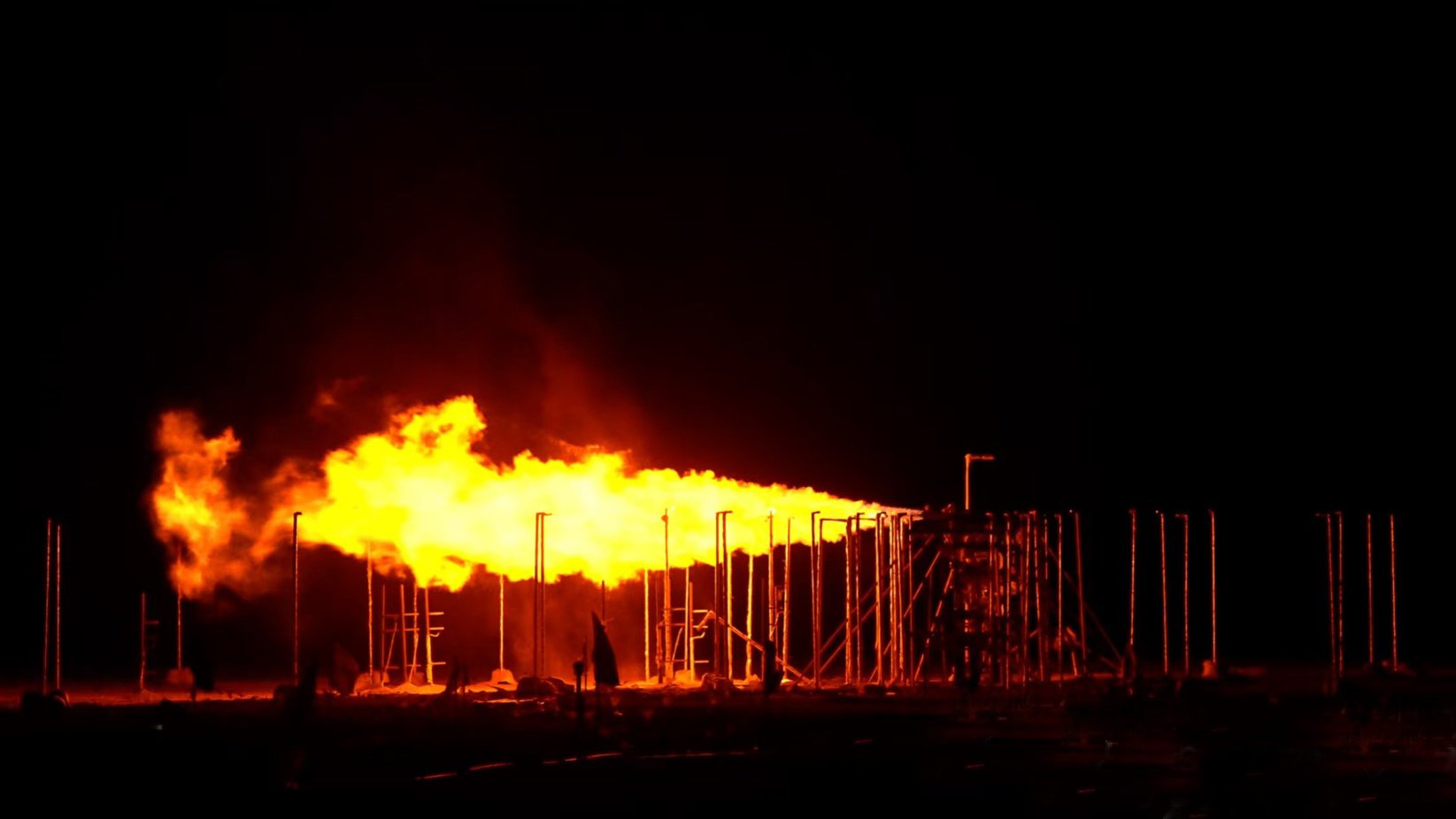
1. Project Background and Industry Challenges
With the advancement of the "Dual Carbon" goals, hydrogen energy, as a clean secondary energy source, is witnessing rapid development in its storage and transportation infrastructure. High-pressure pure hydrogen pipelines represent an economical and efficient method for large-scale, long-distance hydrogen transportation. However, hydrogen possesses characteristics such as small molecular size, high propensity for leakage, fast combustion speed, and a wide explosion range. The consequences of a jet fire resulting from a hydrogen leak differ significantly from those of traditional natural gas. Prior to this project, China lacked full-scale, high-pressure experimental data for pure hydrogen pipeline leak jet fires. This gap resulted in a lack of empirical evidence for pipeline design, safety distance determination, risk assessment, and emergency planning, forming a key technical bottleneck hindering the safe development of the industry.
2. Project Objectives
This project aimed to achieve the following core objectives by conducting China's first series of full-scale high-pressure pure hydrogen pipeline leakage jet fire tests:
Fill the Technical Gap: Obtain key kinetic and thermodynamic data from real high-pressure pure hydrogen leak jet fires.
Quantify Accident Consequences: Establish quantitative relationship models between variables (leak hole size, pressure, jet angle) and consequence parameters (flame morphology, heat flux, shockwave overpressure).
Validate Assessment Models: Provide a high-confidence calibration benchmark for existing hydrogen leakage, dispersion, and combustion simulation models.
Support Standardization: Provide core technical support for the engineering design of high-pressure hydrogen pipelines in China, the determination of safety protection distances, and the formulation/revision of relevant industry standards and codes.
3. Test Program and Core Technology Systems
3.1 Test Platform:
The tests were conducted at the "Pipeline Fracture Control Test Field" located in Hami, Xinjiang. This facility is the only one in Asia and the third in the world capable of conducting full-scale, high-steel-grade, large-diameter, multi-medium pipeline burst and jet fire tests, enabling realistic simulation of actual operating conditions.
3.2 Test Design:
The tests simulated multiple typical failure scenarios that could occur during the operation of a high-pressure pure hydrogen pipeline:
Leakage Variables: Multiple typical leak hole diameters were set, ranging from small fissures to larger orifices.
Operational Variables: Different pipeline operating pressures and various jet angles (horizontal, vertical, inclined) were covered.
3.3 Core Data Acquisition System:
The tests utilized the DE-900 series high-performance dynamic signal testing and analysis system as the central data acquisition hub, constructing a comprehensive monitoring network:
Thermodynamic Parameter Acquisition: High-response temperature and pressure sensors were deployed at critical locations inside and outside the pipeline and within the flame zone to monitor hydrogen state parameters and ambient temperature changes in real time.
Fire Consequence Parameter Acquisition:
Thermal Radiation: Heat flux gauges were arranged at various distances and orientations around the flame to precisely measure the spatiotemporal distribution of heat flux generated by the jet fire.
Shockwave: High-frequency pressure sensors were deployed to capture the shockwave overpressure generated at ignition and during combustion.
Auxiliary Monitoring: High-speed cameras, infrared thermal imagers, and other equipment were integrated to synchronously record flame shape, size, and development process.
4. Test Results and Data Analysis
This series of tests successfully obtained a batch of high-quality empirical data:
Flame Characteristic Database: Clarified the relationships between flame length, width, lift-off height, and stability for high-pressure hydrogen jet fires under different leakage conditions.
Quantified Thermal Hazard Data: Established datasets correlating heat flux intensity at specific distances with leakage parameters and ambient wind speed, providing direct input for safety distance calculations.
Pressure Wave Characteristic Data: Obtained the attenuation patterns of shockwave intensity caused by jet fire combustion.
Model Validation and Refinement: Comparing test data with predictions from mainstream Computational Fluid Dynamics (CFD) and empirical models significantly improved the predictive accuracy and reliability of these models in high-pressure pure hydrogen scenarios.
5. Application Value and Industry Significance
The successful implementation of this project holds profound technical and industrial implications:
Provides Direct Input for Engineering Design: Test results can directly inform the optimization of valve spacing, leak detection system layout, material selection, and fire protection design for high-pressure hydrogen pipelines.
Enhances Risk Assessment Accuracy: Provides key data on accident consequence probability and severity for Quantitative Risk Assessment (QRA) of hydrogen facilities, making risk assessment outcomes more scientific and realistic.
Accelerates Standardization System Development: Provides indispensable core experimental evidence for China to lead or participate in the formulation of national, industry, and international standards (e.g., ISO) in the field of hydrogen pipeline transportation.
Ensures Safe Industry Chain Development: Fundamentally improves China's understanding and prevention/control capabilities regarding major safety risks in hydrogen infrastructure. It removes a key obstacle for the safe, large-scale, and commercial operation of the hydrogen energy industry and strengthens societal and investor confidence.
6. Conclusion
This full-scale high-pressure pure hydrogen pipeline leakage jet fire test series is a milestone event in the development of hydrogen safety technology in China. By leveraging a world-class test platform and high-performance data acquisition systems, the project successfully obtained empirical data at an internationally advanced level, completely breaking the long-standing reliance on foreign data or theoretical extrapolation in this field. Its achievements hold significant academic value and directly serve the safety planning and engineering practices of China's hydrogen energy industry. It makes a prominent contribution to building a solid safety foundation for China's competitiveness in the global hydrogen arena.
